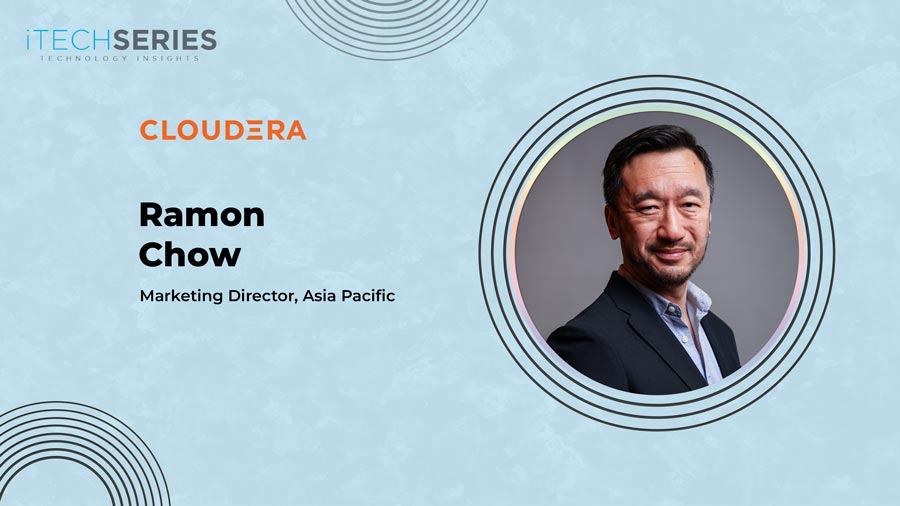
Ramon Chow, Marketing Director for Asia Pacific at Cloudera, shares his perspective on evolving marketing’s role within GTM strategy. He explores global-local alignment, sales collaboration, demand generation, brand building, and measuring marketing impact, offering practical insights into creating scalable regional programs that drive meaningful business growth.
Welcome to the interview series, Ramon. Could you tell us about yourself and your marketing journey?
Thanks for having me! I am the Marketing Director for Asia Pacific at Cloudera. Over the past 25 years, I’ve worked across campaigns, channels & alliances, and field marketing in APAC, with some early experience covering the UK as well.
My career in B2B technology marketing has reinforced a simple belief: marketing needs to be a strategic business partner and a driver of commercial growth, not just a function that executes campaigns and events.
In APAC, that means understanding the different market dynamics across the region and aligning our go-to-market strategy with the needs of customers, sales teams, and partners. At Cloudera, we enable global organisations to use data and AI to solve the impossible today by transforming any data anywhere into real-time, predictive, and prescriptive insights.
I lead our regional field marketing team in building targeted engagements that support pipeline and revenue growth in both prospect accounts and existing accounts. Regional marketing plays a bigger role than local execution. By solving regional challenges, leveraging cross-marketing activations, and developing approaches that can scale, we serve as an incubator for global GTM innovation.
As a marketing leader, what is the biggest shift in marketing’s role within a broader GTM strategy?
At Cloudera, our marketing strategy directly aligns with our company’s core objectives and opportunities to anchor, seed, and grow our customers. Our marketing team has developed a cross-functional, collaborative approach for building strategic GTM plans with operational excellence. We influence the overall GTM strategy and are responsible for developing the localised GTM strategy to align to company and regional objectives.
We work closely with direct sales, inside sales, and partner sales through a regular cadence of demand-funnel reviews. We look at what is in the funnel, where opportunities are progressing, where conversion is slowing down, and what we can do together to move them forward. Depending on the challenge, that might involve account-based marketing (ABM), more targeted engagement, or higher-touch activities.
This changes the relationship between marketing and sales. Rather than treating lead generation as a handoff, we work together to improve the performance of the entire funnel. Marketing remains accountable for its contribution but also takes an active role in identifying and addressing the obstacles that prevent opportunities from progressing.
The metrics matter, of course, but the real value comes from acting on them. Better alignment and stronger funnel conversion turn marketing investment into tangible business opportunities.
The lesson for marketers: don’t just report what your campaigns generated. Understand what happened next, and work with sales to improve it.
How do you translate global marketing strategy into locally relevant programs while maintaining brand consistency and governance?
My golden rule is simple: standardise the back-end, localise the front-end.
Our Global Marketing teams provide the foundation: our brand design and guidelines, core messaging, campaign frameworks and governance, and reporting. Regional teams then adapt these assets to local market needs, ensuring the strategy resonates with the audiences we want to reach.
For example, we participate in Gartner Data & Analytics Summits across different markets. While maintaining consistency in our brand identity and core messaging, we localise our supporting assets, demonstrations, and presentations. We also leverage local customers to share their use cases with event audiences. We find that these stories resonate particularly well when they come from a well-known local brand, because audiences can relate to the organisation’s market context and business challenges.
This approach allows us to benefit from global scale without delivering a one-size-fits-all experience. Consistency and repeatability make better use of regional teams’ limited resources rather than recreating campaigns from scratch.
The key is to be clear about what must remain consistent and where local teams have the flexibility to adapt. Good governance should enable relevant execution, not prevent it.
“Marketing needs to be a strategic business partner and a driver of commercial growth, not just a function that executes campaigns and events.”
As a marketer, how do you approach balancing the need for short-term demand gen with long-term brand building?
I don’t see demand generation and brand building as competing priorities; we balance both in our mix of activations. The opportunity is to make them work harder together.
When we develop a demand-generation campaign, we also look at how to amplify its reach and extend its value beyond the immediate target audience. A campaign designed to engage prospects and generate opportunities can also reinforce our positioning, increase awareness, and help us reach a broader market.
This means thinking beyond the initial campaign deliverables. We consider how we can reuse content, promote key messages through additional channels, and extend the reach of our activities. That way, the same investment can contribute to both immediate commercial objectives and longer-term brand awareness.
For regional marketing teams operating with limited resources, this is particularly important. Rather than treating every activity as a standalone execution, we should look for opportunities to build on existing work and maximise its impact.
The objective is not simply to generate more leads or more awareness independently, but to ensure that our activities consistently reinforce the value we bring to the market.
What has been your most memorable experience as a marketer?
For me, job satisfaction comes from hearing positive feedback from the people who matter most: our customers, prospects, and sales teams.
Whether it’s following one of our annual EVOLVE Flagship events or a smaller, ABM-focused campaign, it’s rewarding to hear that customers and prospects found the experience valuable, insightful, or even eye-opening and that it prompted further conversations with our sales teams.
Equally meaningful is feedback from our sales leadership and teams that marketing has created the right opportunities for them to engage with customers, open up conversations, and uncover new business opportunities.
These moments reinforce what I believe marketing should deliver. It’s not simply about running successful campaigns or generating leads; it’s about creating meaningful experiences that bring customers and our business closer together.
Ultimately, the most memorable part of marketing is knowing that our work makes a tangible difference—helping customers discover new possibilities while enabling our sales teams to build relationships and create opportunities for growth.
Beyond the usual metrics or signals, how do you evaluate the impact of regional marketing programs?
Pipeline and revenue remain central measures of marketing impact, but they don’t tell the whole story. We also need to understand how effectively marketing contributes to moving opportunities through the funnel and engaging the right people within target accounts.
At Cloudera, we look at several dimensions:
Pipeline contribution: Marketing-sourced and marketing-influenced pipeline, alongside new customer acquisition and expansion opportunities.
- Funnel progression: How opportunities move through the funnel, where conversion slows and where marketing and sales can intervene to improve progression.
- Account engagement: Whether we are building meaningful engagement across relevant stakeholders within target accounts, from executive leaders to practitioners and technical communities.
- Sales alignment: Whether sales teams actively involve marketing in account planning, pipeline reviews, and targeted engagement strategies.
I also place significant value on what I call the “Trust Dividend”—the commercial trust earned when sales leadership sees marketing as a genuine partner in achieving business outcomes. When sales leaders involve marketing in account strategy, pipeline discussions, and solving commercial challenges, it signals that marketing is contributing beyond campaign execution.
Ultimately, measurement should do more than demonstrate performance after a campaign. It should help us make better decisions, identify bottlenecks, and improve future results. Evidence demonstrates marketing’s contribution; the Trust Dividend turns that contribution into a stronger strategic partnership.
What advice would you give marketing leaders looking to build effective growth strategies?
My advice is to understand the business you are supporting, take shared ownership of commercial outcomes, and make every resource count.
- First, understand how the business grows. Get close to sales, understand the customer journey, and learn where opportunities are won, lost or delayed. This will help you make better decisions about where marketing can have the greatest impact.
- Second, build strong working relationships with sales and partner teams. Regularly review the funnel together, identify bottlenecks, and agree on actions. Marketing becomes more influential when it solves business problems, rather than simply reporting campaign activity.
- Finally, especially for regional teams with limited resources, look for ways to scale what already works. Leverage global campaigns, shared assets, and the expertise of both global and local teams. Standardise the back-end, but give regional teams the flexibility to localise the front-end.
The goal is to build a repeatable approach that balances efficiency with market relevance. When we combine commercial understanding, cross-functional collaboration, and disciplined execution, marketing can make a much stronger contribution to sustainable growth.
About Ramon Chow
Ramon Chow is an APAC Marketing Director with 25+ years of experience driving regional growth across enterprise software, data management, and telecommunications. With two decades leading diverse Asia Pacific markets, he specialises in integrated marketing, demand acceleration, partner ecosystems, and strategic planning. Ramon partners with sales, global marketing, and channel teams to translate corporate strategy into market-relevant execution, with a strong focus on pipeline, measurable ROI, data-driven decisions, and sustainable commercial impact.