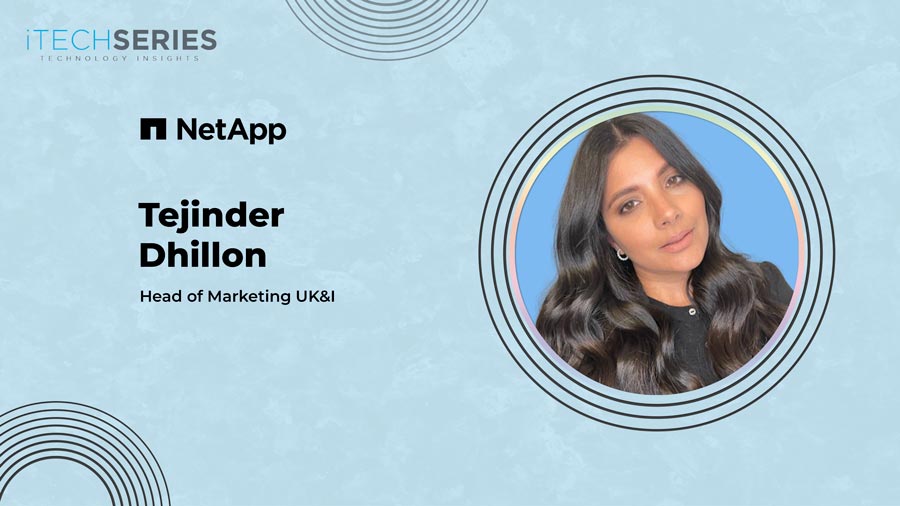
In this edition of our interview series, Tejinder Dhillon, Head of Marketing UK&I at NetApp, shares insights drawn from her experience spanning regions, functions, and growth-focused strategies. From balancing brand building with demand generation to leveraging AI, customer insights, and cross-functional collaboration, she offers perspectives on the evolving world of B2B marketing and sustainable business impact.
It’s great to have you for this interview series, Tejinder. Could you tell us about yourself and your journey as a marketer?
Absolutely, it’s great to be here. My journey in marketing has been shaped by working across different regions and functions, which has given me a very holistic perspective on the discipline. I started with a strong interest in understanding customer behaviour and quickly realised that impactful marketing sits at the intersection of creativity, data, and business strategy.
Over time, I’ve had the opportunity to work on both brand-building initiatives and revenue-driven campaigns, which has helped me develop a balanced approach. Today, I see myself not just as a marketer but as a business partner to sales and leadership teams, someone focused on driving growth, building meaningful customer relationships, and delivering measurable impact.
Having worked across multiple marketing functions and regions, how has your perspective on modern B2B marketing evolved?
Modern B2B marketing has become significantly more customer-centric and data-led. Earlier, it was often campaign-driven and product-focused. Today, it’s about understanding the buyer journey in depth and engaging customers in a more personalised and value-driven way.
Working across regions has also shown me that while technology and tools are global, customer expectations are often highly local. Successful marketing strategies balance global consistency with local relevance. Another key shift is the tighter alignment with sales marketing, which is no longer just about awareness but about influencing pipeline and revenue at every stage of the funnel. Above all, the correct judgment!
How do you balance long-term brand building with short-term demand generation and pipeline goals?
See brand and demand generation as two sides of the same coin, not competing priorities. Strong brands make demand generation more efficient, and consistent demand activity reinforces brand credibility.
In practice, I aim for a portfolio approach. We invest in long-term brand equity through thought leadership, storytelling, and consistent messaging while simultaneously running targeted campaigns that drive immediate pipeline. The key is alignment on shared metrics and ensuring that campaigns ladder up to a clear brand narrative.
It’s also about patience and discipline; while demand generation delivers quicker wins, brand building is what sustains growth over time.
“Modern B2B marketing has become significantly more customer-centric and data-led. Earlier, it was often campaign-driven and product-focused.”
Tell us about your most challenging marketing campaign experience so far and what you learned from it.
One of the most challenging campaigns I worked on involved launching a complex solution across multiple markets with very different levels of maturity. The challenge wasn’t just the campaign execution, but aligning stakeholders across regions, sales teams, and product teams.
What I learned is that clarity and alignment early on are critical. Defining a clear value proposition, ensuring stakeholder buy-in, and adapting messaging for local markets made all the difference. It also reinforced the importance of agility, being willing to test, learn, and optimise quickly rather than waiting for perfection.
How has AI and data-driven marketing changed the way you understand customer behaviour and design personalised experiences at scale?
AI and data have transformed marketing from being intuitive to being far more predictive and precise. Today, we can analyse behaviour patterns, intent signals, and engagement data to better understand where customers are in their journey.
This enables us to move from broad segmentation to true personalisation at scale, delivering the right message through the right channel at the right time. However, the real value comes not just from the technology itself but from how we use it responsibly and strategically.
For me, it’s about combining data insights with human creativity using AI to enhance decision-making while still focusing on authentic, meaningful customer experiences.
What are the most important factors for driving strong collaboration between marketing, sales, and other revenue teams in large organisations?
Alignment starts with shared goals. When marketing and sales are aligned on outcomes, particularly pipeline and revenue, it naturally fosters collaboration.
Beyond that, communication and transparency are key. Regular check-ins, shared dashboards, and clear definitions of success help ensure everyone is working towards the same objectives. It’s also important to build trust, understand each other’s challenges, and create a culture where feedback flows both ways.
Ultimately, the most successful organisations break down silos and operate as one revenue team, rather than separate functions.
As a marketing leader, how do you assess the success of a marketing program beyond the standard metrics?
While metrics like leads, conversions, and pipeline are critical, I believe success goes beyond the numbers.
I look at factors such as:
- Customer engagement quality – Are we reaching the right audience and creating meaningful interactions?
- Sales alignment and adoption – Are sales teams finding value in what marketing delivers?
- Brand perception and trust – Are we strengthening our position in the market?
- Long-term impact—Are we building sustainable growth, not just short-term wins?
About Tejinder Dhillon
Tejinder Dhillon is a marketing leader with over a decade of experience driving growth and leading strategic initiatives in the corporate technology sector. Alongside her corporate career, she coaches ambitious women professionals on career growth, executive presence, and personal branding. Combining leadership expertise with insights from editorial styling experience, she helps women build confidence, strengthen their professional identity, and unlock new opportunities for advancement.