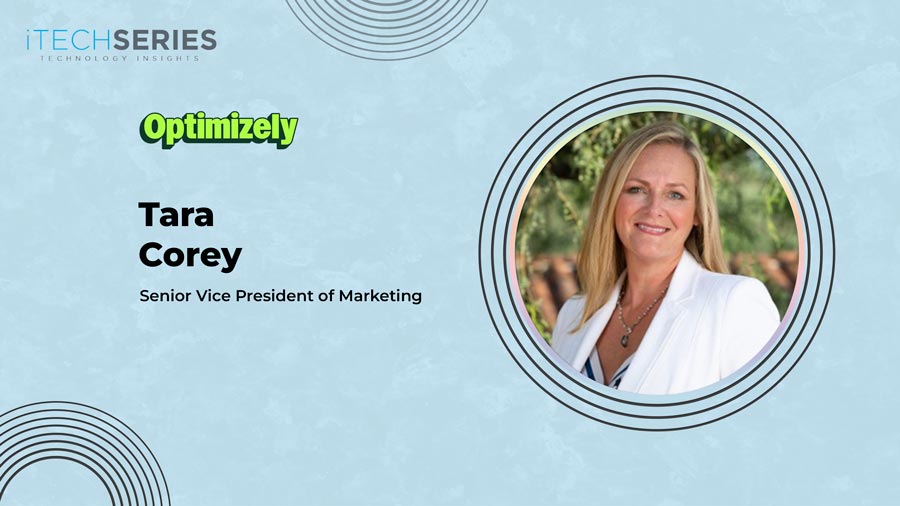
Tara Corey, Senior Vice President of Marketing at Optimizely, shares her perspective on leading modern marketing in the AI era. In this interview, she discusses balancing brand and demand, turning data into business decisions, strengthening cross-functional alignment, scaling marketing with innovation, and using AI to empower creativity while driving sustainable business growth.
Welcome to the interview series, Tara. Could you tell us about yourself and your journey as a marketer?
Absolutely. I’ve spent the majority of my career at the intersection of marketing, technology, and customer experience while leading marketing organizations through periods of significant change. Along the way, I’ve held leadership roles at companies including SAP, Qlik, Ellucian, and now Optimizely.
What originally drew me to marketing was that unique combination of creativity and business impact. Marketing requires you to understand people, tell compelling stories, solve problems, and deliver measurable results. Very few functions get to operate at all of those levels simultaneously.
Throughout my career, one thing I’ve learned is that while technology and customer expectations continue to evolve, the fundamentals of great marketing remain remarkably consistent. It’s still about understanding who you’re trying to reach, connecting them with the right message at the right time, and creating experiences that build trust and drive action.
Today, as SVP of Marketing at Optimizely, I’m focused on helping marketers navigate an increasingly complex landscape shaped by AI and rapidly changing customer journeys. What excites me most is that we’re entering a period where technology has the potential to remove some of the operational burden from marketing and create more space for the creative, strategic, and storytelling work that makes great marketing truly memorable. I think that’s one of the biggest opportunities AI presents for our industry: giving marketers the freedom to focus on what they do best.
How do you balance long-term brand building with short-term demand generation priorities in your marketing strategy?
I don’t see brand and demand as competing priorities. The strongest marketing organizations understand that they work together.
Demand generation helps capture opportunities that exist today, while brand building creates the conditions for future growth. If you focus exclusively on short-term demand, you can drive activity for a period of time, but eventually you risk running out of efficient opportunities. If you focus only on brand, it becomes harder to demonstrate impact and momentum.
The key is alignment around outcomes. Every campaign should support immediate business objectives while also reinforcing the broader story you want customers to associate with your brand over time. The most effective marketing strategies create a continuous connection between awareness, engagement, conversion, and loyalty rather than treating them as separate activities.
What strategies help strengthen alignment between marketing, sales, product, finance, and executive leadership?
Alignment starts with shared goals. Many cross-functional challenges happen when teams are optimizing for different outcomes or measuring success differently.
One of the most effective things leaders can do is create clarity around priorities, expected business outcomes, and how each function contributes to those outcomes. When teams understand not only their own objectives but also the broader business context, collaboration becomes much easier.
I also believe consistency in communication matters. Regular planning cycles, shared visibility into performance, and ongoing conversations between teams help reduce surprises and create stronger partnerships. The best organizations don’t wait until something goes wrong to collaborate. They build alignment into how work gets done from the beginning.
In an era of abundant data, how can marketing leaders turn insights into meaningful business decisions rather than simply generating reports?
The challenge today isn’t access to data. Most organizations have more data than ever before. The challenge is identifying which insights actually matter.
I’ve always believed that data should help answer a business question or support a decision. If reporting becomes an activity on its own, teams can spend a lot of time measuring things without creating action.
The most effective marketing leaders start with the decision they need to make and work backwards. What are we trying to understand? What behavior are we trying to influence? What outcome are we trying to improve? Once those questions are clear, the data becomes much more useful because it provides direction rather than simply information.
Ultimately, the goal isn’t more reporting. It’s creating enough clarity and confidence to make better decisions faster.
“The brands that stand out will be the ones that embrace originality, take creative risks, and create experiences that feel distinctly human.”
AI is reshaping every aspect of marketing. How has it influenced your approach to strategy, campaign execution, and team priorities?
One of the biggest shifts AI has created is forcing marketing leaders to think differently about where people add the most value.
AI is incredibly effective at accelerating repetitive tasks, summarizing information, generating first drafts, and helping teams move faster. But the real opportunity isn’t simply producing more content or completing more tasks. It’s creating more capacity for strategic thinking, creativity, experimentation, and customer understanding.
When I talk to marketing leaders, one of the most common questions I hear is how to turn AI-driven efficiency into meaningful business impact. That requires more than adopting new technology. It requires rethinking workflows, priorities, and how teams spend their time.
The organizations seeing the greatest value from AI are using it to reduce complexity and improve decision-making, not just increase output.
At Optimizely, that’s something we’re thinking about a lot. We believe AI should help marketers spend less time navigating operational complexity and more time focused on creativity, strategy, and customer experiences. Ultimately, marketers should be free to do the work that only humans can do.
As organizations scale, how do you build marketing processes that drive consistency without limiting innovation?
The goal isn’t to standardize everything. It’s to create enough structure that teams can move faster and make better decisions.
Consistency becomes important as organizations grow because it helps teams align around shared goals, workflows, and ways of working. But innovation requires flexibility. If every process becomes overly rigid, creativity suffers.
The balance comes from creating clear frameworks while giving teams room to experiment within them. Establish standards where consistency matters, such as measurement, planning, and governance, but leave space for testing new ideas, channels, and approaches.
In fact, that philosophy played a big role in Optimizely’s recent rebrand. We wanted to make a statement that in a world increasingly shaped by AI, creativity and human ingenuity matter more, not less. As more content gets generated at scale, there’s a real risk of a sea of sameness. The brands that stand out will be the ones that embrace originality, take creative risks, and create experiences that feel distinctly human. The best marketing organizations are disciplined about how they operate, but they never lose sight of the creativity and curiosity that make great marketing possible.
Where do you see the biggest shift in marketing’s role within the broader go-to-market organization?
Marketing is becoming increasingly central to how organizations understand and engage customers across the entire lifecycle.
Historically, marketing was often viewed primarily as a communications or demand generation function. Today, it sits much closer to strategy, customer experience, product adoption, and revenue growth.
As customer journeys become more fragmented and digital experiences become more personalized, marketing plays an increasingly important role in connecting insights, technology, content, experimentation, and customer engagement. That’s creating a much more cross-functional role than we’ve seen in the past.
The biggest shift is that marketing is no longer just responsible for attracting attention. It’s increasingly responsible for helping organizations understand customers, coordinate experiences, and drive growth across the business.
About Tara Corey
Tara Corey is a marketing leader with over a decade of experience driving business growth through data-driven marketing, demand generation, and sales and marketing alignment. Having held leadership roles at SAP, Qlik, Ellucian, and Optimizely, she specializes in customer experience and marketing transformation. Tara is passionate about helping organizations leverage AI, innovation, and creativity to deliver measurable business impact while building lasting customer relationships.