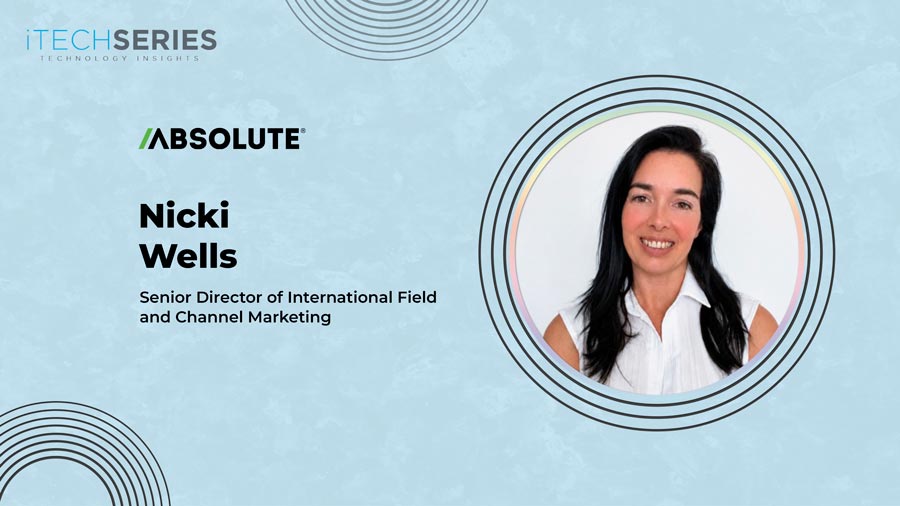
In this exclusive interview series, Nicki Wells, Senior Director of International Field and Channel Marketing at Absolute Security, shares insights from two decades in enterprise marketing. She explores the balance between global strategy and local relevance, the shift toward business-outcome-driven buying, the evolution of field marketing, and how AI is reshaping modern go-to-market strategy and leadership.
Nicki, it’s wonderful to have you for this interview. Tell us about yourself and your journey as a marketer.
I’m a proud mum of three beautiful children, living in Hampshire with my partner. I enjoy nature, good food, the odd glass of wine (or two), and more recently have taken up Badminton as a hobby in my spare time! My marketing journey started almost 20 yrs ago now at a global endpoint security vendor, F-Secure. Over my time there, I worked in a mix of different roles, including sales, so marketing wasn’t originally in the plan, but I found myself gravitating towards the strategic, creative, and commercial side of marketing, and that’s where it all began for me.
That early experience in sales has stayed incredibly valuable throughout my career, because it gave me a strong understanding of sales priorities, revenue pressure, pipeline expectations, and what commercial teams genuinely need from marketing.
It’s one of the reasons I’ve always believed marketing should be tightly aligned to business outcomes & measurable & predictable (wherever possible!) growth.
Since then, I’ve successfully built international marketing strategies & led pan-international marketing teams at global cybersecurity companies, including Rapid7, before my current role at Absolute Security, where (as well as leading a fab team of Marketers) I’m also responsible for building and scaling our international SDR and demand generation teams. I’ve worked across field marketing, channel marketing, executive CISO/CIO engagement, ABM, pipeline generation, PR, and global go-to-market strategy, always with a focus on how marketing can drive both regional relevance and commercial impact, and I LOVE it!
You’ve led international marketing across EMEA, LATAM, and APJ. What’s the biggest challenge in balancing global consistency with regional relevance?
The biggest challenge is recognising that while global strategy creates consistency, customer expectations are never truly “one-size-fits-all.” You need a strong global narrative, consistent positioning, and aligned business priorities, but the way you engage buyers in Germany differs significantly from Japan, India, or LATAM. Different markets have different levels of risk appetite, buying cycles, channel influence, cultural nuances, and exec priorities.
The mistake many organisations make is assuming localisation simply means translation. True regional relevance means understanding the market dynamics, the customer mindset, and the local business environment. The most successful international strategies create a clear global framework while empowering local marketers to adapt messaging, channels, programs, and engagement approaches in ways that resonate locally. That balance is critical to building both trust and commercial impact.
Over the years, what changes have you seen in how enterprise leaders approach technology purchasing decisions?
Enterprise leaders’ buying behaviours and purchasing decisions have become significantly more business-outcome driven. A few years ago, technology decisions were often led primarily by technical capability. Today, CISOs/Security leaders are far more focused on operational resilience, measurable ROI, business continuity, and long-term risk reduction.
Cybersecurity is a great example of this shift. It’s no longer viewed purely as an IT issue; it’s now a boardroom conversation involving operations, finance, legal, and exec leadership. Enterprises increasingly understand that downtime, disruption, and operational risk can directly impact revenue, customer trust, reputation, and shareholder confidence.
At the same time, buying committees have become larger and more complex, involving multiple stakeholders across security, infrastructure, procurement/finance, and operations. That means vendors must communicate value in business language, not just technical language. And there’s the continuous evolution of AI, which is fundamentally changing the vendor selection process and rapidly becoming the first place buyers turn to for research, validation, and discovery of brands and solutions.
How has field marketing evolved from event-led execution into a more strategic revenue and account-based function?
Field marketing has evolved dramatically over the past decade. Historically, it was often viewed as an execution-focused function centered around events and lead generation. Today, the strongest field marketing teams operate as strategic commercial partners to sales. Modern field marketing is far more data-driven, account-focused, and revenue-oriented. It’s about identifying where growth opportunities exist; aligning closely with sales priorities and key industries; understanding target account dynamics; and orchestrating integrated programs that drive engagement across the entire buyer journey.
Account-based marketing has accelerated this shift even further. Success now depends on alignment across marketing, sales, engineering, SDRs, customer success, and leadership teams, who all work together around shared revenue objectives. Organisations increasingly expect marketing to demonstrate pipeline contribution, account progression, and business impact, not just activity metrics.
“Enterprise marketing is becoming more commercially accountable, with growing pressure to prove measurable impact across pipeline, revenue, retention, and customer growth.”
You’ve managed direct and channel marketing programs globally. How do you balance partner priorities with revenue growth objectives?
The strongest channel partnerships are the ones where objectives are clearly aligned. Partners want to work with vendors that help them grow their business, differentiate in the market, and create long-term customer value. That means successful channel marketing isn’t just about running ad hoc campaigns to fulfill MDF, it’s about building trusted relationships and creating shared outcomes together.
One of the biggest priorities is ensuring partners feel enabled, informed, and supported while still maintaining focus on measurable business results. That requires clear and continuous communication & transparency around goals, and joint planning on target accounts, pipeline opportunities, and market priorities.
The most effective channel strategies are collaborative rather than transactional. When vendors and partners operate as an extension of each other, the impact on customer engagement and revenue growth can be significant!
How has AI impacted the way you plan and execute your marketing programs?
AI is already transforming marketing at an incredible pace. As mentioned before, AI/LLMs have got a big part to play in vendor selection and decision-making, and it’s so important for us in Marketing, to meet our buyers where they are! AI is fundamentally changing buyer expectations and the speed at which organisations operate. Customers now expect more relevant, personalised, and timely engagement than ever before.
From a productivity perspective, AI is helping my teams accelerate content creation, improve personalisation, analyse data faster, and scale programs more efficiently across multiple markets and languages. For marketers, I think the real value of AI isn’t replacing creativity or human insight; it’s enabling teams to move faster, make smarter decisions, and focus more time on strategic thinking and customer engagement.
Looking ahead, what major shifts do you expect in enterprise marketing, channel partnerships, and global go-to-market strategies over the next few years?
I think we’ll continue to see three major shifts:
- Enterprise marketing will become even more commercially accountable. The expectation to demonstrate measurable and predictable impact on pipeline, revenue, retention, and customer growth will continue to increase.
- Go-to-market strategies will become far more integrated. The traditional separation between sales, marketing, channel & customer success functions is already disappearing. Organisations operating with shared data, shared accountability, and aligned customer engagement strategies will move faster and perform more effectively.
- AI will continue to reshape both customer engagement and operational execution exponentially. The companies that succeed will be the ones that combine both AI-driven efficiency with authentic human connection, trust, and strategic thinking.
About Nicki Wells
Nicki Wells is an International Marketing leader with 18+ year’s experience in the security, cloud, and SaaS industry. She leads international teams delivering programs for senior security leaders focused on cyber resilience, anti-fragility, and operational uptime. Known for clear, no-fluff storytelling, she brings a strong sales background from F-Secure and leadership experience at Rapid7 and Absolute Security, spanning ABM, SDR, demand generation, and go-to-market strategy.