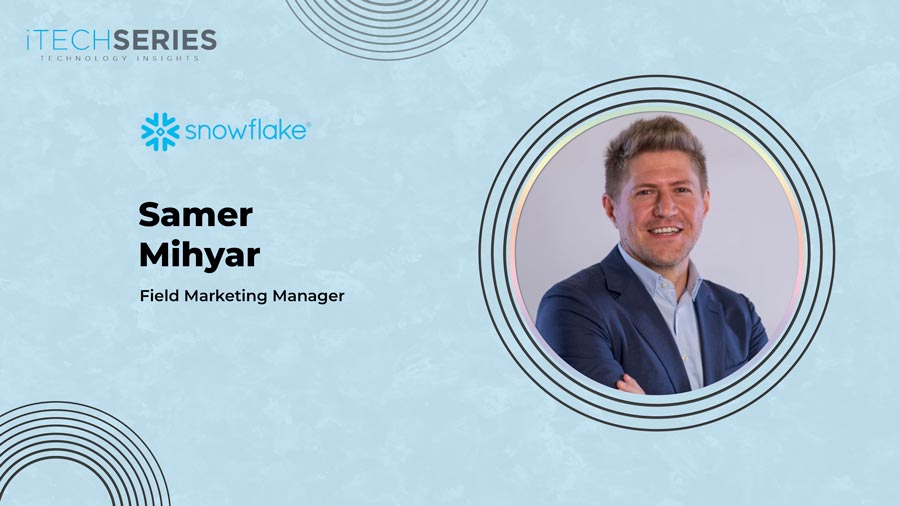
In this edition of the interview series, Samer Mihyar, Field Marketing Manager at Snowflake, shares practical insights on transforming field marketing into a strategic growth driver. From building a pipeline and aligning marketing with sales to balancing global strategy with local relevance and leveraging AI effectively, he explores how marketers can create measurable business impact beyond campaigns.
Welcome to the interview series, Samer. Could you tell us about yourself and your journey as a marketer?
I never actually set out to become a marketer. My fascination with understanding business growth and consumer buying decisions has always been a driving force in my career. Marketing became the place where those interests came together.
Over the last 13+ years, I’ve worked across the Middle East, Africa, Turkey, and beyond, leading field and channel marketing for enterprise technology companies. My experience spans traditional enterprise software, information management, and more recently cloud and AI.
What has remained consistent is my belief that marketing exists to create business value. Whether I’m launching into a new market, building partner ecosystems, running executive engagement programs, or aligning with sales on strategic accounts, my focus has always been on helping customers solve meaningful business problems, not simply generating activity.
I also enjoy building. Some marketers thrive in mature organizations with established playbooks. I enjoy creating the playbook, building processes from scratch, and helping organizations scale.
How do you ensure field marketing initiatives drive measurable pipeline growth rather than just engagement?
I start by refusing to measure success through attendance numbers alone. Every campaign should begin with one question:
“What commercial outcome are we trying to influence?”
That changes everything. Instead of asking how many people registered, we define the following:
- Which accounts matter?
- Which buying stage are we influencing?
- Which stakeholders need to engage?
- What should sales do immediately after the campaign?
I also believe field marketing shouldn’t operate independently. Marketing, sales, SDRs, and partners all need to know their role before the campaign launches.
Can you tell us about your approach to striking a balance between global brand consistency and local market relevance?
Global teams build trust through consistency. Regional teams build relevance. You need both.
I rarely change the core message because the business problems usually remain the same. What changes is the context.
- A CIO in Saudi Arabia may care about Vision 2030, data sovereignty, and government transformation.
- A manufacturing customer may respond better to operational efficiency.
- A financial institution may focus on governance and compliance.
The product doesn’t change; the story does.
I think regional marketers create value by translating global strategy into local business conversations rather than simply translating English into Arabic.
How is AI transforming regional B2B marketing, and where does human expertise remain essential?
AI is dramatically increasing marketing productivity. It helps us create content faster, analyze campaign performance, personalize outreach, and automate repetitive work. But I think its biggest impact is allowing marketers to spend more time thinking strategically.
Where humans remain essential is judgment; AI doesn’t understand organizational politics, it doesn’t build executive trust, it doesn’t negotiate competing priorities between sales, partners, and marketing, and it doesn’t truly understand cultural nuances across markets like the Middle
East. Especially in enterprise B2B, relationships still win deals.
AI makes marketers faster. Human expertise makes them effective.
“Marketing exists to create business value, not simply generate activity.”
In your experience, what drives successful collaboration between marketing, sales, and partner teams?
Alignment starts long before the campaign launches. The biggest mistake organizations make is treating marketing as a service organization that delivers events or campaigns on request. Instead, I believe everyone should own the same commercial objective. When sales, partners, and marketing are measured against shared business outcomes, conversations become very different.
I also believe transparency matters. Sales should know exactly why we’re running a campaign, marketing should understand account priorities, and partners should know where they add value. The best programs I’ve worked on felt like one integrated revenue team rather than three separate departments.
How do you evaluate the success of a marketing program beyond the standard metrics?
Pipeline is obviously critical; revenue matters. But I also look at indicators that predict long-term business success:
- Did we strengthen executive relationships?
- Did we create opportunities for sales that previously didn’t exist?
- Did customers become advocates?
- Did partners invest more alongside us?
- Did we learn something that improves future campaigns?
Marketing isn’t just about creating immediate demand; it’s about increasing the probability of future growth. Some of the most valuable programs don’t generate the biggest attendance numbers; they create the strongest commercial momentum.
What advice would you give to marketers starting their journey?
Don’t chase marketing tactics; learn business. Understand how companies make money, understand how customers buy, and understand finance, sales, and operations. The best marketers I’ve worked with weren’t necessarily the most creative; they understood business better than everyone else.
Secondly, stay curious. Technology changes constantly; AI is changing our industry faster than anything we’ve seen before, and continuous learning has become part of the job.
Finally, remember that marketing isn’t about promoting products; it’s about helping customers make better decisions. If you keep that mindset, your career will naturally evolve from running campaigns to influencing business strategy.
About Samer Mihyar
Samer Mihyar is a regional B2B marketing leader with 13+ years of experience driving go-to-market strategy, demand generation, and partner marketing across the Middle East, Turkey, Africa, and other emerging markets. He specializes in building scalable demand engines through GTM execution, ABM, and field marketing. Passionate about aligning marketing with business outcomes, Samer helps organizations accelerate pipeline growth, revenue, and long-term business success.