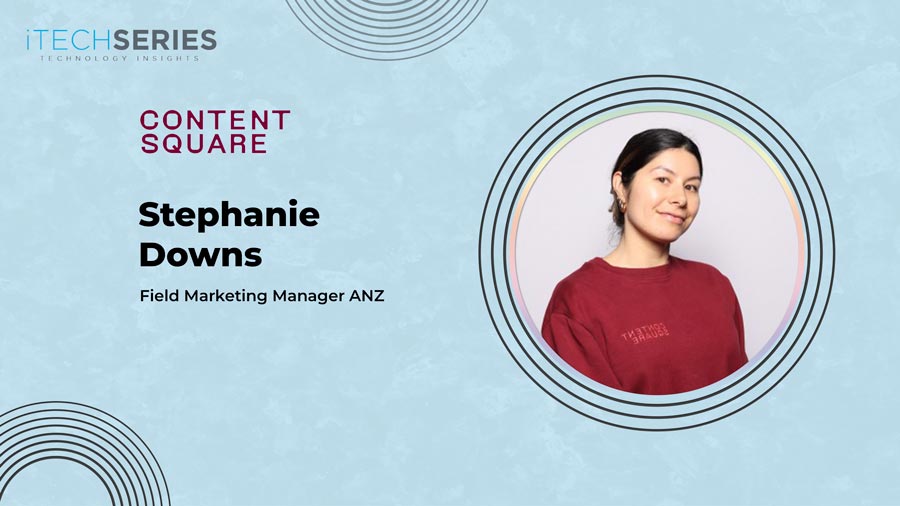
In this iTechSeries interview, Stephanie Downs, a strategic marketer with 9+ years of experience, shares her perspective on localising global GTM strategies, aligning field marketing with sales, and using data to drive growth. She also explores multi-channel campaigns, customer experience, AI, and the growing importance of human-centric marketing in B2B.
Welcome to the interview series. Could you tell us about yourself and your journey as a marketer?
“I currently lead field marketing across the ANZ region at Contentsquare, where my focus is translating global strategy and digital experience insights into high-impact, revenue-generating regional campaigns.
My marketing journey was driven by hands-on execution and grit. While studying PR and radio at university, I actively pursued unpaid marketing internships to gain real-world exposure. That hustle and work ethic paid off right after graduation, landing me an internship in Los Angeles doing B2B marketing coordination for an IT company. That experience completely hooked me on the fast pace of B2B tech. Since then, I’ve grown through various B2B marketing roles, always focusing on bridging the gap between brand storytelling and commercial pipeline growth.”
As a Field Marketing Manager, how do you translate global GTM strategies into campaigns that resonate with local markets?
“It comes down to localization over translation. Global GTM strategies provide the core messaging and framework, but regional markets—especially ANZ—have distinct nuances, seasonality, and buyer behaviors.
For instance, off the back of global product launches at our flagship CX Circle events, my focus in ANZ isn’t just re-sharing corporate slides. Instead, we run owned enterprise roadshows in Melbourne and Brisbane tailored specifically to Tier 0–2 target accounts. We use global announcements as the conversational hook, but frame the content around local market benchmarks, regional industry pain points, and face-to-face networking with local sales reps.”
How do you align field marketing with sales and business goals to generate demand and influence the pipeline?
“By treating sales as co-owners of the campaign from day zero. Field marketing shouldn’t operate as a service desk that hands sales a finished event link; we need to be deeply tied to revenue outcomes.
Before planning any field initiative, I sit down with sales leadership and review target account lists. We look at which enterprise deals are stalled, which stakeholders we can’t reach via digital channels, and what conversations need to happen to advance those opportunities. When field initiatives are explicitly designed to unblock specific sales accounts, alignment happens naturally—and the pipeline impact follows. For example, our flagship CX Circle event in Sydney was designed around target account acceleration, generating over $1M USD in pipeline within a few months.”
Across content, paid media, email, events, and social, what makes a multi-channel campaign cohesive and effective?
“Cohesion isn’t about repeating the exact same message across every channel—it’s about building a consistent narrative journey where every channel plays a distinct, functional role.
A multi-channel campaign works best when digital and field channels feed each other. Paid media and email generate intent signals and build top-of-funnel awareness; high-touch field events convert that digital engagement into peer-to-peer trust; and post-event social and content keep the momentum alive while sales follows up. When all channels are anchored to a single core theme and clear account targets, the campaign feels like a seamless conversation rather than fragmented noise.”
“Field marketing shouldn’t operate as a service desk that hands sales a finished event link; we need to be deeply tied to revenue outcomes.”
With your background in analytics and CX, where does data have the greatest impact on campaign performance and customer experience?
“Data has the greatest impact when it’s used proactively to eliminate friction in the buyer’s journey rather than just retroactively reporting on metrics.
At Contentsquare, we live and breathe digital experience analytics. Knowing where users drop off or experience friction on a digital platform, allows us to craft field marketing discussions around those exact pain points. Additionally, intent and engagement data allow us to move away from broad-brush event marketing toward hyper-targeted, account-based experiences. We use data to invite the right people, deliver hyper-relevant content, and equip sales with pre-meeting context.”
As a Marketing & Brand Strategist, how do you align strong brand positioning with measurable demand and business growth?
“Strong brand positioning creates the pull, but localized field execution creates the conversion. The key to aligning the two is moving from vanity metrics to commercial outcomes.
Brand positioning shouldn’t exist just on billboards or high-level slide decks; it needs to be validated in real-world interactions. When we hosted CX Circle Sydney for 290 leaders, we maintained Contentsquare’s premium global brand positioning while gamifying the experience, using event apps, and facilitating peer benchmark discussions. The result was a memorable brand experience that directly translated into overachieving our attendance and pipeline metrics.”
Looking ahead, how will AI, data, and evolving buyer expectations reshape field marketing and B2B demand generation?
Buyer expectations are higher than ever—executives have zero patience for generic outreach or transactional events.
AI and data will continue to automate the routine, administrative side of field marketing, allowing us to hyper-personalise campaign outreach and analyse engagement in real time. However, as digital noise increases, the value of authentic, human-centric field marketing will actually rise.
The future of field marketing belongs to agile teams that leverage AI for account intelligence but double down on delivering high-value, peer-to-peer experiences that build genuine human trust.
About Stephanie Downs
Stephanie Downs is a strategic marketer with 9+ years of experience across SaaS, customer experience, and demand generation. Her career spans Los Angeles to Sydney, where she has worked across corporate and startup environments, launched products, built brands, and driven pipeline growth. Known for blending creativity with performance, Stephanie combines storytelling, data, and integrated campaigns to connect products with people. She is passionate about global collaboration, human-first marketing, and creating purposeful brand experiences that deliver measurable business impact.