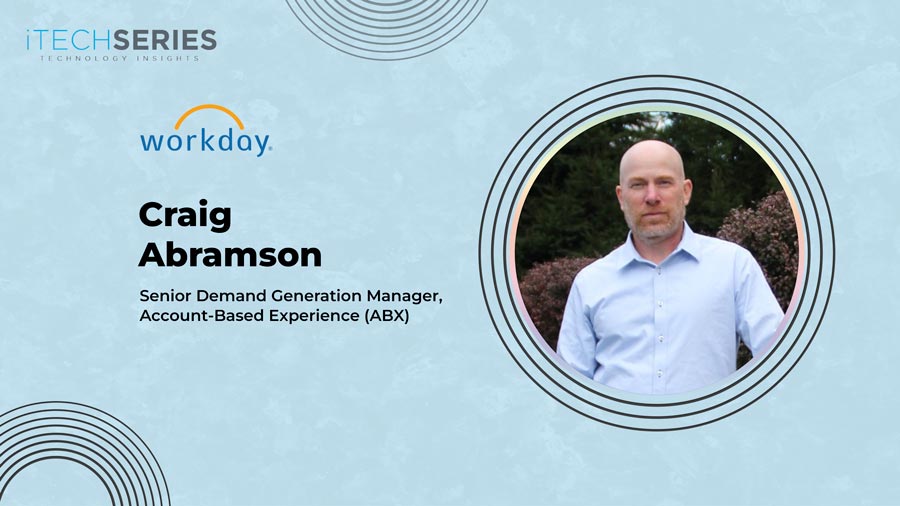
Craig Abramson, Senior Demand Generation Manager, Account-Based Experience (ABX) at Workday, shares valuable insights on building high-impact demand generation engines, driving pipeline through full-funnel ABX, aligning sales and marketing around revenue, optimizing marketing investments, and using data to turn demand generation into a measurable growth engine.
Welcome to the interview series, Craig. Could you tell us about yourself and your journey as a marketer?
It wasn’t intentional, but I ended up in a career focused on B2B software marketing, evolving from on-premises to SaaS and now AI. I’ve mostly been in the startup world, getting the opportunity to wear a lot of different hats. First and foremost, I’ve led demand generation to grow the pipeline. Since a lot of it involved bootstrapping, I’ve always taken advantage of up-and-coming technologies to drive the right leads. Whether it is search engine optimization before SEO was big, launching ABM programs before there were teams focused on ABM, or getting the most out of intent data to grow the pipeline, I’ve been fortunate to be able to pivot quickly and shift resources to what’s working in order to achieve the biggest impact.
But being at startups, I’ve also had the opportunity to implement CRM systems like Salesforce and marketing tech stacks, including HubSpot and Marketo. I’ve helped build scoring models in Demandbase to uncover the accounts that are most likely in the market and then run programs targeting those buying committee members at the right time.
This background of demand generation, sales management, and marketing operations has helped when I’m digging into program data to figure out what’s working and what’s not so that I can optimize my programs to achieve better results. So going from the startup world to Workday has been an advantage because I’m well aware of how leads flow through the different systems, where to find the right data, and how to figure out how to get more ROI out of my programs. This approach helped me grow the marketing-originated pipeline from 5% to 56% in under a year at Zimit before being acquired by Workday. At Workday, the same methodology has influenced over $500M in the global pipeline in FY25.
What insights have shaped your approach to building demand generation engines across startups and global enterprises?
I think the biggest thing is that there’s not a single playbook that works across all of these companies, so you have to go in with a testing mindset and get ready to pivot quickly. For example, I can’t even count how many times I was building a pipeline for one set of solutions to all of a sudden have the priorities completely shift and have to ramp up demand for a different solution that could have a completely different target audience.
Budgets change, so you also have to figure out how to have the greatest impact with every dollar. When I inherited a budget that went from $1M to $100,000, I knew at the time that the only way to succeed was to drive leads through organic traffic and optimize the website for form submissions. When I’ve had more budget, it’s given me the ability to test more and use the data to guide decisions.
But one thing that has helped me thrive in these environments is that instead of using generic email addresses, I’ve always sent email campaigns from my own company email address. This gave me instant feedback on messaging to see what resonated and also see what absolutely didn’t work. By doing this, I’ve had countless online conversations with prospects and was able to qualify them before handing off to an account executive. If I didn’t do this, I would never see the responses to figure out what’s working and what we should double down on.
How do you engage multiple buying committee members across the buyer journey through full-funnel ABX?
At a startup, the likelihood of having all the members of a buying committee in your database is slim. I’ve supplemented that info using something like ZoomInfo to pull in contacts in the US. Or using LinkedIn to get very granular with ad targeting as well as content syndication to drive the right opted-in contacts at those accounts, especially in EMEA.
I’ll choose the right accounts based on intent data if I’m at a startup. Using Demandbase, I’m able to use our scoring models to determine the accounts most likely in the market to build the right account list. Then I try to engage those members across different channels, starting with email with 1:1 nurtures that hit on their pain points to try and establish credibility as well as build awareness. I’ll reinforce those messages with ads on LinkedIn. I’ll use content syndication to make sure we’re hitting the right people at those accounts scoring the highest too. I’ll work with the SDR team to start calling the influencers and decision makers. Google retargeting ads also go a long way in keeping solutions top of mind.When all of these channels are working together targeting the same accounts at the same time, you start to see account engagement scores rise, and that’s when the SDR conversations start converting.
“Marketing thinks that it’s providing the right leads and sales isn’t following up. While sales think the marketing leads aren’t strong enough.”
Could you tell us about your most challenging yet rewarding marketing campaign experience?
I was at a company focused on Governance, Risk, and Compliance. We were struggling to find messaging that resonated with this audience, so we decided to narrow it down and run ABM plays based on companies that just reported material weaknesses. We built an internal tool that scraped financial reports to uncover the ones that we needed to target. We then created collateral focused on resolving material weaknesses, along with webinars. Now we started the multichannel ABM programs, and that’s where we started to make an impact on the pipeline. I even had one large enterprise respond directly to my email, state they needed to move forward with a solution within three months, and even provided their budget. I handed that off to sales, and despite our average deal cycle taking a minimum of nine months, this one closed in under three.
Based on your experience, how can marketing and sales align around a quality pipeline rather than lead volume?
There has always been that mindset between the two teams that marketing thinks that it’s providing the right leads and sales isn’t following up. While sales thinks the marketing leads aren’t strong enough. I started working closely with the CRO at one of the startups so that we were completely aligned on the programs I was running, and I could trust their team to follow up. Instead of reporting on MQLs, I changed it to focus on pipeline and the number of marketing-originated bookings. This partnership changed the game, and it’s how I started working moving forward.
At one startup, that alignment drove marketing-originated bookings to 65% while also achieving a 70% MQL-to-SAL conversion rate. The key was both teams being accountable to the same number.
How do you balance your marketing budget across channels to drive performance and efficiency?
Use the data to tell you what’s working and where you should shift budget. For example, running ABM plays at one startup, I invested a lot in paid search but quickly shifted the majority of that budget to LinkedIn when I saw more traction from completed forms than from visits to our website. So it’s about coming up with an allocation based on your experience but then being ready to quickly pivot by analyzing the data. The data will always tell you where to put the next dollar if you are willing to move fast enough to act on it.
What is the one piece of advice you would give to marketers trying to turn marketing into a true revenue engine?
My biggest advice to start is to build a solid foundation in writing first. I started my career writing marketing collateral, and that has continued to help today. I can quickly write email nurtures, white papers, code, and web pages and other assets that resonate with audiences. So knowing what to say and how to say it is key. But beyond that, it’s making sure you have the data to connect the dots between what’s driving the pipeline: what’s getting your audience to your website, what’s getting them to complete forms, and even what’s causing them to unsubscribe so you know what’s not working. Then pivot quickly based on what the data is telling you. Get the right message to the right people through the right channels, and the revenue will follow.
About Craig Abramson
Craig Abramson is a demand generation and ABX leader focused on building marketing engines that drive pipeline, growth, and ROI. At Workday, he influenced over $500M in the global ABX pipeline in FY25. Previously at Zimit, he grew the marketing-originated pipeline from 5% to 56% in 10 months, contributing to its acquisition by Workday. His expertise spans demand generation, ABM, SEO, marketing operations, GTM strategy, and AI-powered marketing.