
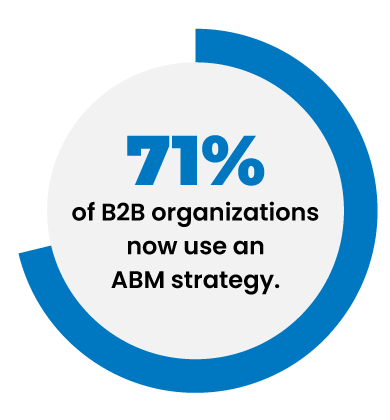
B2B marketing teams often generate more leads and accounts than sales teams can realistically pursue. The challenge is knowing which accounts deserve attention first. B2B account scoring helps marketers prioritize high-value prospects by evaluating factors such as firmographics, engagement, intent, fit, and consumer buying behavior. Instead of treating every account equally, scoring gives revenue teams a structured way to identify accounts with the strongest potential and align marketing and sales efforts around them. When built correctly, an account scoring model can improve targeting, accelerate pipeline creation, and help teams focus resources on accounts most likely to convert, expand, and generate long-term revenue.
1. What Is Account Scoring in B2B Marketing?
Account scoring is a data-driven process that ranks potential B2B customer accounts based on their fit, value, engagement, and likelihood to convert. Instead of treating every prospect equally, it helps sales and marketing teams identify which accounts deserve the most attention and resources.
A strong account scoring model typically evaluates factors such as Ideal Customer Profile (ICP) fit, company size, industry, revenue, engagement, buying intent, strategic importance, and propensity to purchase. Accounts that closely match the ICP and demonstrate strong buying signals receive higher scores and become higher-priority prospects. While basic lead scoring focuses primarily on individual contacts, account personalization evaluates the broader organization and can incorporate engagement across multiple stakeholders or buying groups.
Account qualification can be managed through simple spreadsheets and weighted criteria or advanced platforms that use AI, machine learning, and real-time data to continuously refine account priorities.
2. Why Is Account Scoring Important?
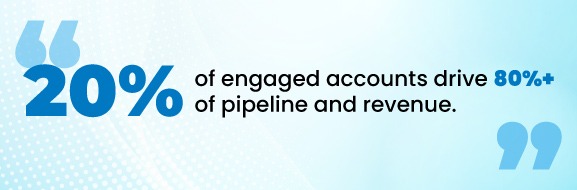
B2B teams prioritize high-value prospects, improve sales efficiency, and focus resources where they can have the greatest impact. Here are five key benefits:
Prioritizes High-Value Accounts
Account scoring helps sales and marketing teams rank prospects based on ICP fit, engagement, intent, and potential value. Instead of treating every account equally, teams can focus their time and resources on prospects that are more likely to become valuable customers, improving productivity and creating a more focused go-to-market approach.
Improves Sales and Marketing Alignment
A shared account scoring model gives sales and marketing teams a common framework for identifying priority accounts. By combining firmographic data, engagement signals, and buying intent, both teams can agree on which accounts deserve attention, reducing misalignment and creating more coordinated, effective outreach throughout the buyer journey.
Identifies Buying Intent
Account qualification combines account fit with behavioral and intent signals to identify prospects that may be actively researching a solution. Website activity, content engagement, product searches, hiring patterns, and other signals can reveal buying interest, helping teams identify accounts that are potentially entering an active buying window.
Improves Resource Allocation
B2B sales teams have limited time, budgets, and resources. Account rating helps allocate these resources more effectively by directing effort toward accounts with stronger potential and buying signals. This reduces time spent pursuing low-value prospects and allows sales teams to concentrate on opportunities with greater potential for conversion and revenue.
Supports Better Business Decisions
Account prioritization provides a data-driven view of account quality and customer engagement strategy, helping teams make more informed decisions. While no scoring model can predict outcomes perfectly, continuously refining scoring criteria can improve prioritization, reveal changes in buyer behavior, and help organizations adapt their targeting and GTM strategies over time.
3. Types of Account Scoring Models
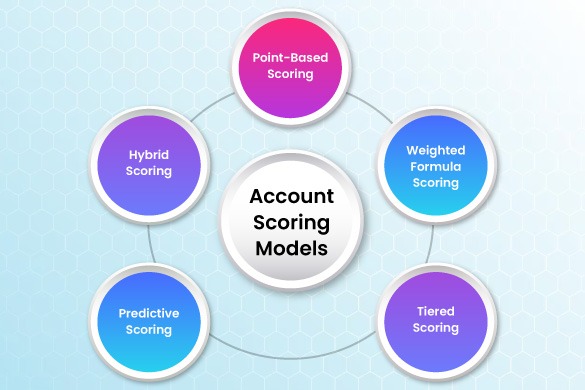
Different account scoring models offer varying levels of complexity, flexibility, and predictive power. Here are five of the most effective account scoring models for B2B organizations:
Point-Based Scoring
Point-based scoring assigns fixed values to specific account attributes and behaviors. For example, an account may receive points for matching the target industry, company size, technology stack, or engaging with content. The scores are added together to rank accounts. This model is simple, transparent, and easy to implement.
Weighted Formula Scoring
Weighted scoring assigns different importance to key dimensions such as account fit, customer engagement, and buying intent. For example, fit could represent 40% of the total score, while intent could represent 30%. This approach provides greater flexibility than basic point scoring and emphasizes signals most relevant to revenue outcomes.
Tiered Scoring
Tiered scoring groups account for categories such as A, B, C, or D based on their overall scores. High-priority A accounts receive immediate sales attention, while B accounts may enter targeted campaigns, and lower-tier accounts remain in nurture programs. This model simplifies account prioritization and provides clear guidelines for sales resource allocation.
Predictive Scoring
Predictive scoring uses machine learning and historical customer data to identify patterns associated with successful conversions. It can analyze numerous signals simultaneously and uncover relationships that manual models may overlook. As new data becomes available, predictive models can continuously improve account prioritization, making them particularly useful for organizations with substantial historical data.
Hybrid Scoring
Hybrid scoring combines multiple methodologies, typically using rule-based or weighted scoring alongside predictive analytics. Organizations can begin with firmographic and behavioral criteria before adding AI-driven insights as their data maturity improves. This flexible approach balances transparency and control with predictive capabilities, making it suitable for teams gradually modernizing their account qualification processes.
4. How to Build an Effective Account Scoring Model
Building an effective account scoring model means combining ICP, firmographic attributes, behavioral signals, and historical data, while continuously refining scores based on conversion patterns and account value.
Define Your Ideal Customer Profile
Start by clearly defining your Ideal Customer Profile (ICP). Identify the characteristics of accounts that receive the most value from your product, such as industry, company size, revenue, location, technology stack, and business needs. A well-defined ICP provides the foundation for your scoring model and ensures you evaluate accounts against the right criteria.
Identify Key Account Attributes
Determine which characteristics and signals indicate that an account is a strong fit. These can include firmographic factors such as revenue and employee count, as well as strategic attributes like technology usage, growth rate, funding, or competitive solutions. Review your customer journey and historical conversions to identify the attributes most closely associated with successful accounts.
Collect Relevant Account Data
Gather reliable data for the attributes you’ve identified. Combine CRM records with first-party engagement data and third-party intent signals to create a more complete account view. Website visits, content downloads, product-page activity, webinar attendance, and demo requests can reveal customer engagement, while external research and hiring activity can provide additional intent signals.
Assign Weights to Scoring Criteria
Not every attribute should have the same influence on an account’s overall score. Assign higher weights to factors that historically correlate strongly with conversions and revenue. For example, a demo request may deserve significantly more weight than a social media interaction. Use historical performance data wherever possible rather than relying solely on assumptions when setting these weights.
Set Scores, Thresholds, and Priorities
Create a scoring framework that translates account attributes and behaviors into an actionable score. Establish thresholds that determine when an account becomes sales-ready. For example, high-scoring accounts can receive immediate sales attention, while mid-tier accounts enter targeted nurture programs. Make sure scores are visible in your CRM so sales teams can easily prioritize their outreach.
Evaluate and Continuously Refine
Account rating should not be treated as a one-time exercise. Regularly compare account scores with closed-won and closed-lost outcomes to determine whether the model is accurately identifying valuable prospects. Adjust your ICP, scoring criteria, weights, and thresholds as buyer behavior and business priorities change. Continuous evaluation helps keep the model accurate, relevant, and useful.
5. Best Practices for B2B Account Scoring
An effective B2B account scoring model should help marketing and sales teams identify high-value accounts, prioritize outreach, and focus resources on prospects most likely to convert. The following best practices can help organizations build a practical and scalable scoring framework:
Start Simple and Build Gradually
Begin with three to five high-impact scoring criteria aligned with your ideal customer profile (ICP). Focus on firmographic fit, engagement, and intent signals that demonstrate clear relevance. A simple model is easier to implement, explain, and refine. As your data improves, gradually introduce additional signals and weighting.
Align Sales and Marketing
Build the scoring model collaboratively with sales and marketing teams. Marketing can identify engagement patterns and content interactions, while sales brings firsthand knowledge of buyer intent needs, objections, and conversion signals. Combining these perspectives creates a more practical model and ensures both teams trust the scores when prioritizing accounts.
Continuously Update Account Scores
Account prioritization should be dynamic rather than a one-time assessment. Update scores as accounts demonstrate new behaviors, such as visiting high-intent pages, downloading content, attending events, or requesting demos. Continuous scoring helps teams identify changes in buying interest and ensures sales representatives act on the most relevant signals.
Use Weighted Signals and Score Bands
Not every signal carries equal importance, so assign weights according to its relationship with revenue outcomes. A demo request should typically carry more weight than a social interaction. Instead of relying on one rigid cutoff, create score bands such as high, medium, and low priority to guide different engagement strategies.
Monitor, Validate, and Refine the Model
Regularly compare scores across converted, lost, and inactive accounts to determine whether the model accurately predicts business outcomes. Track pipeline creation, opportunity progression, and closed-won revenue to evaluate performance. Use these insights to adjust criteria, weights, and thresholds, creating a continuous feedback loop that improves scoring accuracy over time.
6. Common Challenges and How to Overcome Them
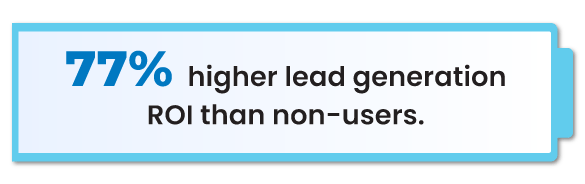
B2B account scoring can help sales and marketing teams prioritize high-value accounts, but poorly designed models can create misleading scores, reduce sales confidence, and waste valuable resources. Here are five common challenges and practical ways to overcome them.
Relying on Arbitrary Scoring Weights
Assigning points based on assumptions can produce misleading account scores. For example, a content download may receive more points simply because it appears valuable, even when historical data shows little connection to revenue.
How to overcome: Base scoring weights on historical outcomes. Compare closed-won and closed-lost accounts to identify attributes and behaviors that genuinely correlate with conversion and revenue.
Overvaluing Intent Signals
B2B Intent data can indicate that an account is researching a topic, but it does not necessarily indicate buying readiness, budget, or organizational fit. Over-relying on intent can lead sales teams toward accounts unlikely to convert.
How to overcome: Use intent as a secondary prioritization signal. First establish whether an account fits your ICP, then use intent to identify accounts showing increased interest.
Creating Unclear or Unexplainable Scores
A score alone provides little value if sales representatives cannot understand why an account received it. When scoring becomes a black box, sales teams may ignore the model and rely on intuition.
How to overcome: Make scores explainable. Show the key attributes, behaviors, and signals driving an account’s score so representatives understand both the opportunity and the recommended next step.
Using Static Scoring Models
Markets, customer needs, competitive landscapes, and buying behaviors constantly change. A model built months ago may no longer reflect the accounts most likely to convert today.
How to overcome: Review and recalibrate the model regularly using current pipeline, conversion, and revenue data. Continuous monitoring helps identify emerging patterns and changing market opportunities.
Failing to Connect Scoring With Sales Execution
Even an accurate scoring model can fail if sales teams do not know how to act on account scores. Without clear workflows, high-priority accounts may not receive timely or relevant engagement.
How to overcome: Integrate scoring into CRM workflows and define clear actions for each score tier. Combine scores with account insights and recommended outreach strategies to turn account intelligence into measurable sales activity.
7. Essential Tools for Account Scoring:
The right technology can make account scoring more accurate, scalable, and actionable. While basic scoring models can be managed using spreadsheets and CRM workflows, growing B2B organizations often need specialized platforms to combine account data, engagement signals, intent, predictive analytics, and sales activity.
CRM and Marketing Automation Platforms
These platforms provide the foundation for managing account data and operationalizing scoring. Tools such as Salesforce and HubSpot can help teams store account information, track engagement, assign scores, and trigger workflows based on scoring thresholds. Integrating scoring with CRM systems ensures sales teams can access account priorities within their existing workflows.
ABM and Account Intelligence Platforms
ABM platforms provide deeper account-level insights by combining firmographic, behavioral, engagement, and intent data. Solutions such as Demandbase and 6sense help organizations identify target accounts, monitor B2B buying signals, and prioritize accounts based on potential revenue opportunities. These platforms can be particularly valuable for organizations managing large account databases.
Data Enrichment and Intent Tools
Accurate account segmentation depends on reliable data. Data enrichment and intent platforms can supplement CRM records with company information, technology usage, buyer intent activity, and external research signals. These additional data points can help teams identify changes in account fit and buying interest.
 Predictive Analytics and AI
AI-powered tools can analyze historical account and revenue data to identify patterns associated with successful opportunities. Predictive models can complement rule-based scoring by identifying accounts that share characteristics with previously converted customers.
Data and Workflow Orchestration
Account rating becomes more valuable when scores automatically flow between systems. Data orchestration tools can connect CRM, marketing automation, enrichment, intent, and sales. Engagement platforms help teams keep account information synchronized and scores updated.
8. Case Studies: Account Scoring
Leading B2B companies use account qualification to identify high-value accounts, combine b2b buying signals, prioritize engagement, and accelerate revenue opportunities.
Snowflake: Multi-Tier Account Scoring
Snowflake uses a six-tier account funnel to evaluate target accounts based on firmographic fit and engagement from multiple stakeholders. Its scoring combines digital and physical signals, including personalized landing-page visits and direct-mail interactions. This account-level approach helped generate more than $50 million in pipeline from 200 target accounts.
Salesforce: Intent-Based Account Scoring
Salesforce uses third-party intent data to identify accounts actively researching relevant topics before they engage directly with the brand. Signals such as topic surges, website activity, and buying-committee engagement help prioritize accounts. High-scoring healthcare accounts receive targeted campaigns and executive outreach, helping Salesforce account rating increase pipeline across priority accounts.
Gong: Multi-Signal Account Prioritization
Gong combines intent, engagement, conversational intelligence, and account-level signals to prioritize companies showing buying activity. Its scoring considers dark-funnel engagement, previous product familiarity, and interactions across multiple departments. By surfacing high-priority accounts within seller workflows, Gong helps sales teams engage buying groups when intent signals indicate stronger purchase readiness.
Clay: AI-Powered Account Scoring & Prioritization
Clay account scoring ranks target companies using enriched firmographic, technographic, and B2B intent data. By combining 150+ data providers, AI research, custom scoring rules, and real-time signals, marketers can prioritize high-fit accounts, identify buying opportunities, filter poor-fit prospects, and automatically route qualified accounts into sales and outreach workflows.
9. Future of Account Scoring
The future of account qualification is moving beyond traditional models that rely primarily on historical sales data and predefined criteria. While firmographic, technographic, engagement, and behavioral signals remain important, modern account segmentation will increasingly identify patterns that marketers and sales teams may not recognize on their own. AI and predictive analytics can analyze thousands of variables across millions of accounts, helping businesses uncover and identify emerging opportunities that conventional scoring models may overlook.
AI-powered platforms such as Factors and UserMotion are already shaping this next phase. Machine learning algorithms can evaluate multiple signals simultaneously, continuously learn from account behavior, and improve scoring accuracy over time. UserMotion combines first-party and third-party signals to create predictive account scores, while Factors brings together marketing, sales, website, advertising, and social engagement data to provide a broader view of account activity. These capabilities allow teams to prioritize accounts based not only on past behavior but also on their current likelihood to engage or purchase.
Another important development will be the deeper integration of account scoring with CRM and intent data. By combining CRM information with third-party intent signals, companies can identify accounts actively researching relevant products or solutions, even when those prospects have not yet engaged directly with the brand. This combination of firmographic, technographic, behavioral, and B2B intent data can create more dynamic scores that change as buying signals evolve.
Automation will also make account qualification more actionable. Instead of requiring sales teams to continuously monitor dashboards, modern platforms can automatically alert representatives when high-value accounts demonstrate strong B2B buying signals. Notifications through email, Slack, Microsoft Teams, or other sales tools can help teams engage prospects when interest is at its peak.
Conclusion
Account scoring has become an essential strategy for B2B organizations looking to prioritize the right accounts, improve sales and marketing alignment, and maximize revenue opportunities. By combining ICP fit, firmographic data, engagement, intent, and behavioral signals, businesses can move beyond guesswork and make more informed decisions about where to focus their resources. As AI, predictive analytics, and real-time intent data continue to evolve, account scoring will become increasingly dynamic and precise, helping revenue teams identify opportunities earlier, personalize engagement, and drive sustainable growth.