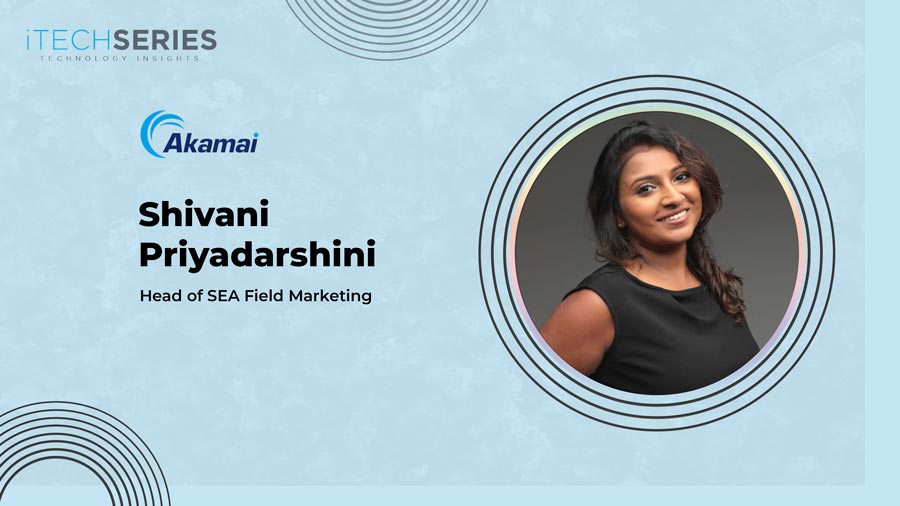
In this edition of the interview series, Shivani Priyadarshini, Head of SEA Field Marketing at Akamai Technologies, shares her insights on the evolving role of field marketing, customer-centric GTM strategies, changing buyer expectations, customer retention, and leadership. She explains why trust, relevance, and execution remain at the heart of sustainable B2B growth.
Welcome to the interview series, Shivani. Could you tell us about yourself and your journey as a marketer?
If there’s one thing I’ve learned about marketing, it’s that it rarely goes according to plan—and that’s probably why I’ve stayed in it for nearly 20 years, not including the seven years I spent in a call centre before transitioning into the field.
The truth is, I got into marketing by accident. Before marketing, I worked in sales and customer adoption for the Unified Communications Group at Microsoft. While I could sell, I realized I enjoyed understanding customers, listening to their challenges, sharing ideas, and helping solve problems far more than closing deals. Eventually, I recognized that what excited me most wasn’t sales—it was marketing.
When I made the switch, I started from scratch. I had no formal marketing education or experience. Everything I learned came from hands-on work, making mistakes, asking questions, and figuring things out along the way.
Over the years, I’ve worked across industries, countries, and cultures, each experience teaching me something new. Today, I lead Field Marketing for Southeast Asia at Akamai Technologies, partnering closely with sales teams, customers, partners, and executives across the region.
What I love most about marketing is that it sits at the center of everything. You’re close enough to customers to understand their challenges, close enough to sales to understand market realities, and close enough to the business to see the impact of your work.
Some of my most valuable lessons came not from successful campaigns but from failures, missed targets, and tough conversations. Marketing taught me resilience. At its core, marketing is about building trust, creating opportunities, and helping people make better decisions. Everything else is simply the vehicle that gets you there.
You have extensive experience leading field marketing across different regions. What makes field marketing a critical growth driver in today’s B2B landscape?
I may be biased, but I’ve always believed field marketing is where strategy meets reality.
You can have great campaigns, messaging, and content, but if they don’t resonate with customers or help advance sales conversations, they don’t matter. Customers don’t care how good your product is; they care whether it solves their problem.
Field marketing is a critical growth driver because B2B buying has become increasingly complex. You’re no longer selling to a single decision-maker but engaging multiple stakeholders with different priorities and concerns. At the same time, buyers have access to more information than ever and often complete much of their research before speaking with a vendor.
That’s where field marketing plays a vital role. It’s not about filling rooms or running events for the sake of it—it’s about creating opportunities for meaningful conversations.
I’ve always seen field marketing as the bridge between marketing and sales. We stay close enough to customers to understand their challenges and close enough to sales to understand market realities. This gives us a unique ability to influence the pipeline, accelerate opportunities, and build trust long before a contract is signed.
One thing I’ve learned is that sales teams don’t want more marketing activities; they want conversations, opportunities, and revenue. Good field marketing helps deliver that.
Having worked across Southeast Asia, I’ve also learned that what works in one market may not work in another. Field marketing provides the flexibility to adapt globally while executing locally.
At the end of the day, people buy from people. Technology and buying journeys may evolve, but trust and relationships still drive business decisions, and field marketing helps create those moments where trust is built.
What are some of the key elements of a successful go-to-market strategy?
I’ve always felt that people overcomplicate go-to-market strategies.
At its core, a successful GTM strategy comes down to answering a few simple questions: Who are we trying to reach? What problem are we solving? Why should they care? And why now? If you can’t answer those clearly, even the most sophisticated marketing plan won’t help.
The second key element is alignment. One of the biggest reasons GTM strategies fail isn’t because the idea is wrong, but because marketing, sales, product, partners, and customer success teams are working toward different priorities. When everyone pulls in different directions, you lose consistency and credibility with customers.
I’ve also learned that GTM strategies must be built around the customer, not the product. Companies often focus too much on features and capabilities, but customers care about outcomes. They want to know how you’ll help them reduce risk, save money, grow revenue, improve efficiency, or make their jobs easier.
Execution is equally important. I’ve seen great strategies fail because nobody followed through, and simple strategies succeed because teams executed them consistently. A good plan executed well will almost always outperform a perfect plan that stays on a slide deck.
Finally, successful GTM teams know how to adapt. Markets evolve, customer priorities shift, competitors react, and what looks great on paper doesn’t always work in reality. The best teams listen, learn, and adjust quickly instead of becoming attached to the original plan.
For me, a successful go-to-market strategy isn’t the one with the most slides or the most complex framework. It’s the one that understands the customer, aligns the business, drives action, and ultimately helps solve a problem customer genuinely care about.
“Great campaigns, messaging, and content only matter if they resonate with customers and advance sales conversations. Customers don’t care how good your product is; they care whether it solves their problem.”
How have changing customer expectations influenced modern marketing strategies?
Customers today are far more informed than when I first started in marketing, and that’s fundamentally changed how we engage them.
In the past, buyers relied heavily on vendors for information. Today, they have access to reviews, analyst reports, peer recommendations, industry communities, and AI tools before ever speaking to a salesperson. In many cases, they’ve already formed an opinion before we enter the conversation.
As marketers, we can no longer rely on generic messaging or one-size-fits-all campaigns. Customers expect relevance. They want you to understand their industry, business challenges, and where they are in their buying journey.
Customers have also become more selective with their time. They’re constantly exposed to emails, ads, webinars, and content. If you’re not delivering value, they’ll quickly move on. More communication doesn’t necessarily mean more engagement; relevance matters far more.
I’ve also seen a growing demand for authenticity. Customers want to hear from peers, practitioners, and people who have solved similar challenges. That’s why customer stories, communities, roundtables, and peer-to-peer conversations are so effective. The human voice still makes a difference.
AI adds another dimension. While it helps marketers personalize and scale engagement, it also raises expectations. Customers can often tell the difference between automated content and information that genuinely addresses their needs.
At the end of the day, customer expectations haven’t made marketing harder—they’ve made it better. They’ve pushed us to focus less on ourselves and more on understanding customers, building trust, and creating meaningful experiences. In many ways, that’s how marketing should have worked all along.
Could you tell us about your most memorable experience as a marketer?
I’ve been fortunate to have many memorable experiences throughout my career, but the ones that stay with me aren’t necessarily the biggest events or the campaigns that generated the most leads.
The moments I remember most are the ones that remind me that marketing is really about people.
One experience that stands out was the very first Akamai Media Leadership Summit. The idea actually came about during a casual conversation over drinks between a colleague and me. We started discussing how valuable it would be to bring media leaders from across India, Southeast Asia, and Australia/New Zealand together to learn from one another.
What made it different was that we deliberately chose not to make it a vendor-led event. Instead of having our executives and product experts do all the talking, we invited customers to take center stage. Some delivered presentations, others participated in panel discussions, and one customer even hosted a site visit to their office so attendees could see firsthand how they operated.
What followed was something special. The conversations were open, honest, and incredibly valuable because they came from peers facing similar challenges. There was a genuine willingness to share experiences, lessons learned, and ideas.
What makes it memorable isn’t just that the event was successful. It’s years later, and customers still bring it up when we meet. They remember the people they met, the conversations they had, and the insights they gained.
The summit has evolved over the years, but there is always something special about the first one. It reminded me that sometimes the best marketing doesn’t come from talking about your company or your products. It comes from creating an environment where people can learn from one another.
Customer marketing plays a key role in growth. How should GTM teams approach engagement, retention, and expansion after the initial sale?
One of the biggest mistakes companies make is treating the sale as the finish line. In reality, it’s just the beginning of the relationship.
Customers engage with you because they believe you can solve a problem. Once the contract is signed, your responsibility is to ensure they achieve the outcome they were promised. If they don’t, no amount of customer marketing can compensate for that.
For me, engagement starts with staying relevant. Don’t only appear during renewals or upsell opportunities. Understand what’s happening in your customer’s business—their priorities, challenges, and evolving definition of success.
Retention is built on trust and ongoing conversations, not transactions. Customers stay when they continue to see value. That value may come from product innovation, but it often comes from helping them learn, sharing best practices, connecting them with peers, and providing support when needed.
Expansion becomes easier when you’ve earned the right to have that conversation. Customers should see you as a partner before they see you as a vendor. When that happens, discussions about additional solutions occur naturally because they’re focused on solving business challenges, not hitting sales targets.
I’ve also found that some of the best customer marketing happens when customers learn from one another. Roundtables, workshops, advisory boards, and leadership forums can create powerful peer-to-peer learning opportunities.
At the end of the day, customer marketing isn’t about keeping customers happy—it’s about helping them succeed. When customers are successful, engagement, retention, advocacy, and growth naturally follow.
What advice would you give to marketers who aspire to move into leadership roles?
My first piece of advice is to stop thinking like a marketer and start thinking like a business leader.
Early in my career, I measured success through campaigns, programs, and marketing metrics. As I moved into leadership roles, I realized that what truly matters is whether you’re helping the business grow. Learn how sales works, understand revenue, and know how both your company and customers make money. The more commercial your mindset, the more valuable you’ll become as a leader.
Second, get comfortable being uncomfortable.
Many of the biggest opportunities in my career came from taking on challenges I had never faced before. I didn’t have a marketing degree or a perfect career path, and there were plenty of times I felt out of my depth. But growth often comes from saying yes, learning quickly, and figuring things out along the way. Mistakes are inevitable, and some of my most valuable lessons came from them.
I’d also encourage marketers to invest in relationships. Marketing doesn’t operate in isolation. The most successful marketers build trust with sales teams, partners, customers, executives, and peers. Learn from others, share experiences, and don’t hesitate to ask questions. Leadership is often more about influence than authority.
Finally, stay curious and agile. Marketing is constantly evolving, and the people who continue to grow are those who never stop learning.
Looking back, I didn’t have everything mapped out. I found marketing by accident and stayed because I enjoyed solving problems and helping customers. Stay curious, stay humble, and don’t shy away from opportunities that challenge you—they often shape your career the most.
About Shivani Priyadarshini
Shivani Priyadarshini is a seasoned B2B marketing leader with 28 years of experience, including 21 years in the technology industry and 7 years in customer engagement roles. She has built expertise in field marketing, demand generation, account-based marketing, and go-to-market strategy. Throughout her career, she has helped organizations create customer-centric programs that strengthen relationships, drive growth, and deliver measurable business outcomes across global markets.