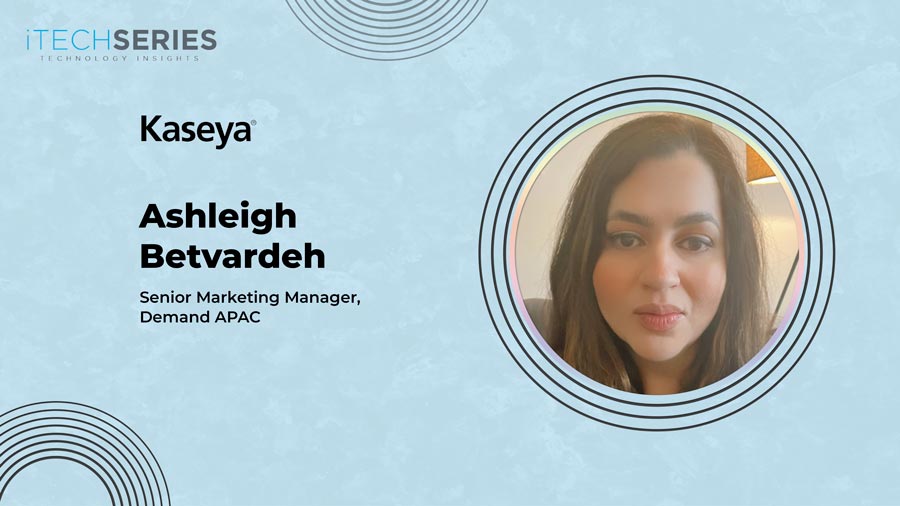
Ashleigh Betvardeh, Senior Marketing Manager, Demand APAC at Kaseya, shares her journey from digital marketing roots to driving integrated, revenue-focused strategies. She explores demand generation beyond lead volume, scales ABM with sales alignment, optimises omnichannel campaigns, and uses AI responsibly, highlighting how to accelerate pipeline, tell stories, and business metrics.
Welcome to the interview series, Ashleigh. Could you tell us more about yourself and your journey as a marketer?
I’ve been fortunate in my marketing career. I started in digital marketing, gaining exposure across multiple industries before specialising in B2B technology and representing APAC at scale.
I’ve never lost sight of my digital roots. For many marketers, including myself, that’s where the passion for marketing starts, understanding audiences, testing, optimising, and achieving measurable results. Over time, I broadened my focus to include webinars, events, public relations, and fully integrated omnichannel campaigns.
Working across APAC often means wearing multiple hats. It’s not always a market where deep specialisation is possible; you naturally evolve into a well-rounded generalist. But at the core of my journey has been a consistent focus on business value, ensuring every strategy, campaign, and channel contributes directly to pipeline creation and revenue.
What key elements define a high-performing demand generation strategy in today’s competitive B2B landscape?
A high-performing demand generation strategy considers the entire funnel, not just lead acquisition. I map each stage of the buying journey and align messaging, channels, and touchpoints to where the buyer is in their decision process. In increasingly saturated markets, simply generating leads is not enough. The ability to track, nurture, and deliver personalised engagement throughout the sales cycle has never been more critical.
The most successful B2B demand generation programmes, and the ones I prioritise, focus on pipeline progression as much as pipeline creation. Acceleration strategies that move opportunities from early stage to close won can significantly impact revenue outcomes, particularly in longer sales cycles and complex enterprise deals.
Ultimately, the marketer’s role has evolved beyond campaign execution. It is about owning influence across the full revenue journey and driving measurable commercial impact.
How do you customise ABM programmes to address the distinct needs of different industries and account tiers?
I would argue that account-based marketing (ABM) programmes define B2B marketing. I customise my programmes through products, messaging, copy, and design and work closely to make the journey feel personalised. Having a strong programmatic platform will help you segment your accounts, analyse intent signals, and control messaging for your accounts. I have built many of these programs throughout my career.
Taking ABM further requires deep alignment with sales. Defining 1-to-1, 1-to-Few, and 1-to-Many strategies together ensures shared priorities and clear measurement frameworks. Agreement on the target account list shapes how accounts are tiered, what resources are allocated, and which tactics are deployed. This clarity strengthens partnership with sales and ensures marketing messaging directly supports their conversations, particularly within enterprise accounts where longer cycles, multiple stakeholders, and sustained engagement strategies are essential to winning the opportunity.
With your expertise in digital marketing, how do you optimise multi-channel campaigns and allocate resources for maximum ROI?
Digital marketing encompasses both paid and organic channels, and true impact comes from understanding how they work together rather than in isolation. In a recent cybersecurity campaign, I integrated physical and digital touchpoints across multiple channels. QR codes on event swag directed attendees to a webinar landing page, while a social activation encouraged them to share which AI character they chose, tied to our branding, which printed their face with the character. By integrating booth engagement, social media amplification, and webinar conversion into a coordinated strategy, we extended the lifecycle of a single activation and turned event interest into measurable social engagement and pipeline contributions.
A strong foundation in digital has kept me agile. The landscape shifts quickly. The first time I saw a ChatGPT referral link appear in traffic sources, it was clear that traditional SEO would continue to evolve. Buyer behaviour is changing, and intent signals are becoming more dynamic and fragmented across platforms. Understanding buyer intent, how prospects discover, research, and validate solutions, is where modern marketing strategy is heading. It gives you more entry points, more precision, and more opportunities to ensure your message reaches the right audience at the right moment.
“The marketer’s role has evolved beyond campaign execution. It is about owning influence across the full revenue journey and driving measurable commercial impact.”
What strategies have you found most effective for aligning marketing and sales while scaling demand across global markets?
I believe the most effective sales and marketing alignment starts with a shared understanding of goals and a clear north star. When both teams agree on priorities, target accounts, and revenue outcomes, decision-making becomes sharper and execution more focused. My personal mantra is that sales and marketing together form the revenue engine of the business. How well they operate in partnership directly influences demand creation, pipeline progression, and overall growth.
In APAC, particularly, relationships matter. Strong alignment is not just about dashboards and metrics but about trust and consistency. Investing time in regular collaboration, shared planning sessions, and team engagement lays the foundation for effective scaling. Having helped grow businesses in the region, I have seen firsthand that genuine partnership is what ensures marketing strategies translate into sales conversations and, ultimately, into revenue.
Beyond lead volume, which KPIs do you focus on to measure the true impact of demand generation on pipeline and revenue growth?
Beyond lead volume, I measure demand generation by its impact on pipeline quality and progression. Leads alone have little value without a clear follow-up and activation process. I look closely at how quickly and effectively leads are engaged; whether there is a structured outreach flow; and how tools like Outreach are being used to sequence, personalise, and optimise engagement. A light but intentional script, paired with consistent testing, ensures marketing-generated interest turns into meaningful sales conversations.
The next metric is opportunity creation. Over time, I have observed that some salespeople can convert a white paper download into a qualified opportunity, while others require a stronger buying signal. After working closely with revenue teams, I learned that performance often comes down to approach. Some sellers are natural hunters; others relationship builders. The key is not just generating more leads but continuously A/B testing sequences, messaging, and even assignment models to understand what drives conversion. Testing between reps, outreach cadences, and messaging can have a greater impact on revenue than simply increasing lead volume. This is especially important when lead scoring models may not surface every viable opportunity for review.
Finally, I focus on pipeline acceleration. Marketing plays a critical role in supporting sales once an opportunity is created. Whether through targeted content, executive engagement, account-specific assets, or coordinated touchpoints, the goal is to help close the gap between opportunity and sale. In B2B environments, where buyers are often evaluating multiple vendors, strategic marketing support throughout the later stages of the funnel can be the difference between progressing a deal and losing momentum.
What makes a brand message compelling, and how do you maintain consistency across all marketing channels?
Brand is the story that marketers are trying to sell.
Having a compelling brand with a clear message and a unique selling proposition will help any B2B or B2C company. As a marketer, I have seen how branding supports channels by feeding the message and leveraging it for ad copy, and by keeping design aligned, which can help with brand recall.
Finally, having some consistent elements can help you scale your business or support new market expansion, which I have had to do for a few businesses. Working with the brand team has always supported me when going to market with multiple channels.
With AI enhancing scalability, how do you maintain genuine human connection and engagement in your marketing?
At this stage, I use AI every day, but never as the finished product. Marketing teams are evolving quickly, yet the foundation of great marketing remains in human psychology; connection and depth are what differentiate strong brands in a landscape where speed often takes priority over creativity. In many cases, the art behind campaigns has been ruled by deadlines, lead models, and attribution pressures. AI can accelerate output, but you still need to validate and relate it back to align with the overall brand.
I have always been a reader, particularly of fiction, and that has shaped how I approach storytelling in marketing. Reading across different perspectives strengthens my ability to write for varied audiences and build messages that resonate with different personas. This has helped me with all forms of copywriting, especially with ads. Ultimately, AI is a tool to support, not replace, because human connection is based on how we feel, and those are the emotions marketers are trying to focus on in their campaigns.
About Ashleigh Betvardeh
Ashleigh Betvardeh is a strategic marketing leader known for driving revenue-focused programs across APAC/APJ. She specialises in aligning marketing with sales to accelerate pipeline, improve conversion, and deliver measurable growth. With expertise in full-funnel demand generation, events, partnerships, and integrated campaigns, she builds data-driven strategies that strengthen pipeline health, enhance buyer engagement, and deliver strong commercial outcomes.