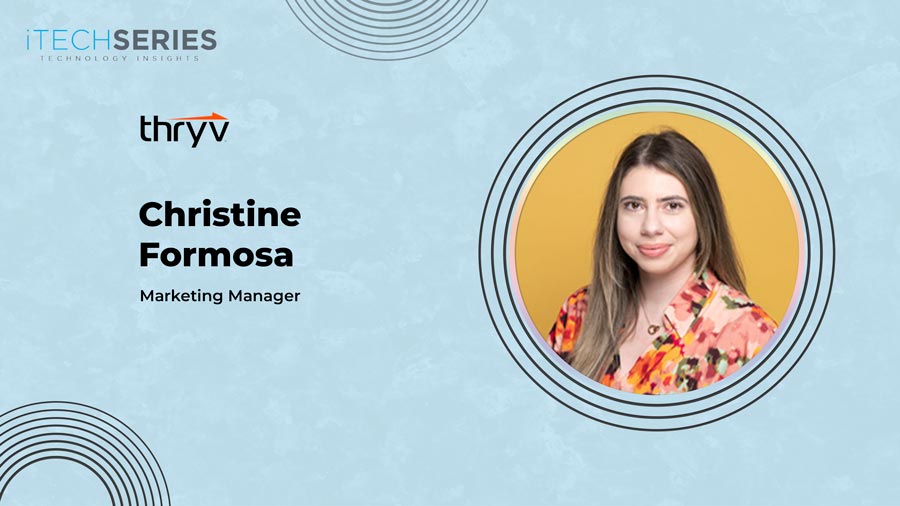
Christine Formosa, Marketing Manager at Thryv Australia and New Zealand, shares her perspective on building brands that drive meaningful growth. From customer insights and integrated campaigns to cross-functional alignment, demand generation, and AI, Christine explores how marketers can create consistent, customer-centric strategies that build trust, engagement, and lasting business impact.
Welcome to the interview series, Christine. Could you tell us about yourself and your marketing journey?
Thank you for having me! I’m Christine Formosa, a Marketing Manager at Thryv Australia and New Zealand. My marketing journey began at Monash University, where I studied a double degree in Marketing and Management. I now mentor students there, which is a lovely way to give back and share my skills and journey, plus what I’ve learned along the way. After university, I joined Sensis (the business behind Australia’s Yellow Pages and White Pages) in a graduate role. Eight years later, I’m still with the business, now part of Thryv, and I’ve been fortunate to grow my career alongside its transformation.
Over that time, I’ve worked across brand marketing, go-to-market strategy, paid media, demand generation, social media, reporting, and product marketing. Working closely with product, sales, operations, IT, and marketing teams has helped me understand how those different pieces connect to deliver results and support revenue growth.
Today, my role focuses on events, partnerships, social media, brand strategy, and employee advocacy across Australia and New Zealand. I’ve also experienced the shift from working in person to being fully remote within a global organisation, which has taught me a lot about relationships, collaboration, and staying connected. I’d describe myself as a marketing generalist. I enjoy understanding the whole funnel and how different marketing disciplines work together, while staying open to whichever channels and approaches best suit the audience and business goals.
Throughout my career, I’ve actively sought opportunities to learn from experts, mentors, and peers, as well as through courses and industry events. That ongoing curiosity has helped me build a broad perspective, and it’s something I want to keep developing as I grow. My aspiration is to be a Chief Marketing Officer, leading, influencing, and ensuring marketing has a seat at the corporate table. I always make time to showcase the work and contribution of the marketing team to the business’s success, helping deliver high-performing campaigns that make an impact on customers, the business, and ROI.
How do you bring brand, content, campaigns, and events together to strengthen market presence and drive growth?
I’m a big believer that strong marketing is shaped by three things: theory, data, and the customer. Before bringing brand, content, campaigns, and events together, I start with four questions: Who is our customer? What problem are we solving? What value are we adding? And how can we demonstrate that value?
For me, theory means drawing on marketing principles and psychology to understand how people think and make decisions. Data helps us test our assumptions through industry research, customer surveys, and campaign performance. And the customer’s voice (through reviews, NPS, direct feedback, and conversations with sales) keeps us grounded in what actually matters to them.
Once that foundation is clear, each activity has a connected role. Brand builds recognition and trust, content explains our value, campaigns encourage action, and events create opportunities for personal connection. They should all reinforce the same proposition, with simple, consistent messaging adapted to the channels our customers actually use.
That takes collaboration across the whole funnel. An event, for example, shouldn’t sit in isolation. The promotion, event experience, landing page, and CRM follow-up should feel connected, with a clear next step for the customer. I’m fortunate to work with colleagues across paid media, web, CRM, and sales to bring those pieces together.
To understand whether that’s driving growth, I set clear KPIs and review points from the outset, looking at both market presence and commercial outcomes. From engagement to qualified leads, conversion, and revenue, we can track it. I’m also a big Asana fan for keeping execution organised. But just as important is the feedback loop: reviewing results, gathering input from the teams involved, and using post-campaign or post-event reviews to improve the next activity. For me, it’s about consistent execution, shared learning, and keeping the customer at the centre.
What role do customer insights and feedback play in shaping your marketing strategies and campaigns?
A lot! I’m grateful that my marketing degree at Monash had a strong focus on marketing statistics. It helped me build the habit early in my career of measuring results and demonstrating the value of what I do. That foundation has helped me make more informed decisions, build cases for trying new things (backed by data), and challenge my own assumptions. I think it’s important to separate personal preference from what the evidence and our customers are telling us, particularly in B2B software.
I use Salesforce, dashboards, and campaign reporting to understand how our marketing contributes to results. But the numbers are only part of the picture. Reviews, surveys, listening to customer calls, and reading sales notes in Salesforce help me understand the reasons behind those results: what customers need, what’s frustrating them, and what might be stopping them from taking the next step.
Those insights help shape our messaging, the content we create, and the questions we address in campaigns. If the same concern keeps coming up in customer conversations, that’s a signal to look at how clearly we’re communicating our value. Plus, working for a company that helps businesses strengthen their online presence and customer relationships, it is more important than ever that we apply that same thinking to our own marketing.
I also value feedback from colleagues, especially those speaking with customers every day. Regular catch-ups, shared ideas, and anonymous surveys all create opportunities to improve. In a remote workplace, you have to be intentional about those conversations and build enough trust for people to give honest feedback. For me, it comes down to listening, testing, and being willing to change direction when the evidence tells us we should.
I’m fortunate to have been with the company for so long and to be part of a strong team where we can share honest feedback and feel supported to take risks. Those insights are only as valuable as our willingness to act on them, try something new, learn when things don’t go to plan, and pivot when we need to.
When building a campaign, which factors influence your choice of channels and customer touchpoints?
This is one I’m extremely passionate about, because channel choices should be guided by data and an understanding of the customer. My starting point is the ideal customer profile, or ICP. A business might have several customer profiles, but for each campaign, we need to be clear about who we’re trying to reach. What’s their role? What challenges are they facing? Where do they look for information, who do they trust, and how do they make buying decisions?
It can be tempting to think we need to be everywhere. I believe we need to be intentional and focus on the channels where our customers spend time and are most receptive to our message. Using a blend of market research, customer research, and industry insights helps to inform what the right mix is.
The campaign objective and stage of the customer journey matter too. Are we building awareness, helping someone compare their options, or encouraging them to take action? Each touchpoint needs a purpose, and the budget should support the channels most likely to achieve that goal.
I also think it’s important to understand what happens between those touchpoints. Website tracking, heatmaps, customer calls, and asking people how they heard about us can help reveal where they’re engaging and where we might be losing them. I also encourage you, if you have the budget, to conduct market research or hire agencies that have the bandwidth to do this research for you. Knowledge is key.
Finally, consistency matters. I think of the familiar “rule of seven” as a reminder of the value of repeated exposure, rather than a fixed number that guarantees a purchase. For me, it’s about reaching the right people with a relevant message at the right moments, then using the results to refine the approach.
“Brand builds recognition and trust, content explains our value, campaigns encourage action, and events create opportunities for personal connection.”
Where does cross-functional alignment make the biggest difference across the marketing campaign lifecycle?
Honestly, everywhere. As I mentioned, I’m someone who isn’t just a brand marketer or a demand generation marketer. Having worked across different stages of the marketing and customer lifecycle, I believe every touchpoint needs to be consistent.
Everyone is busy, and we’re inundated with information from the internet, books, AI, Google, word of mouth, influencers, and social media. The noise is loud. So for a brand or product to cut through, it needs to be memorable and easy to understand.
That starts with a shared understanding of who we’re targeting, the problem we’re solving, and the promise we’re making. It also means being clear about who owns each stage, how leads will be followed up, and which results we’re measuring together so that shared understanding translates into action.
For me, that alignment comes through in our branding. We need consistency, a brand that evokes a feeling, and a presence where our customers are. When customers move into the research phase, the touchpoints they encounter need to provide consistent information that helps them decide which product is right for them. Ads, websites, forms, sales conversations, and expo booths all need to feel like the same brand offering the same promise or proposition.
The handovers between teams help maintain that consistency. If a campaign generates interest, does sales understand the message that brought that person in? Does the follow-up build on that conversation? Are we making the next step easy, or asking the customer to start again?
And it doesn’t stop when someone becomes a customer. Are the onboarding emails reinforcing that promise? Does the product deliver the value we communicated? Does their experience reflect the customer testimonials they’ve seen? Alignment with product and customer support teams helps make sure that promise matches the experience.
I also think alignment means sharing what we learn. Sales can tell us which questions or objections keep coming up, customer teams can highlight recurring challenges, and marketing can use those insights alongside campaign results to improve the next activity. Our job as marketers is to keep reminding ourselves who our ideal customer is and asking whether our touchpoints create a seamless experience. We also need to make sure our new campaigns and ideas feel fresh without becoming repetitive while still reflecting our brand, the core of who we are and what we do.
How do you balance long-term brand building with short-term demand generation and business goals?
This is a topic I’m quite passionate about, especially having spent three to four years in demand generation before moving into my current role with more of a brand marketing focus. I think businesses can underestimate how much short-term demand generation benefits from the brand building that has happened over time.
The balance can be tricky, particularly when there are immediate business targets to meet. Marketing leaders need to help senior stakeholders understand the value of both. Building trust, recognition, and authority takes time, but that foundation can help paid media, sales campaigns, and short-term offers resonate. I see brand and demand generation as not mutually exclusive. They are connected and complementary and work best when planned together.
For me, balancing them means being clear about what we need to deliver now, while continuing to invest in what will support future growth. That means planning for both, with objectives, budgets, and measures that reflect their different roles and timeframes.
I also think there’s a misconception that brand building has to mean big TV ads, major sponsorships, or a large budget. It can happen through consistency in flyers, social media, emails, employee advocacy, and simple activities that don’t require additional media spend. Those everyday interactions help establish who the brand is, what it stands for, and why someone should trust it.
Regardless of budget or team capacity, I’d start with the basics. Clear brand guidelines help ensure our colours, fonts, messaging, tone, and proposition are consistent. Whether we’re creating an event asset, posting on social media, or running a lead generation campaign, it should all reinforce the same brand. That way, even activity designed to drive an immediate response contributes to recognition over time.
Then, as I’ve mentioned, use data. For demand generation, that might mean qualified leads, opportunities, pipeline, revenue, and monthly recurring revenue. For brand building, I’d look at customer research, focus groups, branded searches, website traffic, sentiment, and reviews.
The important thing is to measure each activity against what it’s designed to achieve. Some results are immediate, while others need to be assessed over time. The core principles remain the same: be consistent, work together, keep researching, and keep refining your approach, backed by theory and data. For me, the balance is about meeting today’s business goals while building a brand that supports future growth. With AI making it easier to create more content, building a recognisable brand is more important than ever. Standing out means being clear about who you are, consistent in how you show up, and giving customers a reason to remember and trust you.
Where are you seeing AI deliver the most meaningful impact across marketing strategy today?
I’m a big advocate and fan of AI. Where I’m seeing the most meaningful impact is in helping marketers get from information to ideas and execution faster, while freeing up time for the thinking and relationships behind the work. I use it in my personal life too, whether I’m researching a brand, comparing products or gathering information before buying something. That experience also makes me think about how our customers are researching us and what information they need to make a decision.
Professionally, I use AI to explore ideas, support research, refine content, draft emails and social captions, and organise briefs. From a brand perspective, tools that have our brand guidelines built into them can also help support consistency, although the output still needs humans to review the end result. I’ll use it to mock up a design layout so I can communicate an idea to our design team, or create a starting point for a copywriter to refine. It helps me get an idea out of my head and into something we can discuss and build on. Plus, I love a good Asana board automation!
Through the industry events and conversations, I’ve been part of, one theme keeps coming up for me: the opportunity to speed up repetitive tasks while keeping people at the forefront and involved in the decisions that matter. AI can give me options, but I still need to judge whether they’re accurate, right for our audience, and true to our brand.
I don’t want to lose the experience I’ve built through relationships, asking questions, staying curious, and trying things. My understanding of our customers and business still comes from talking to people, listening, and applying what I have learnt along the way. AI helps me work with that knowledge more efficiently.
For me, the strategic value is in what we do with the time we get back. If I can spend less time on a first draft or organising information, I can spend more time with customers, collaborating with colleagues and thinking through the next opportunity. That’s how I see AI helping me become a stronger and faster marketer.
About Christine Formosa:
Christine Formosa is a passionate, inquisitive, and customer-centric marketer with eight years of experience in B2B software. A Monash University graduate with a double degree and Product Marketing Certification, she currently works as a Marketing Manager at Thryv, leading initiatives across events, partnerships, social media, brand strategy, employee advocacy, and campaign reporting and optimisation across Australia and New Zealand.
Her broader marketing experience spans demand generation, campaign execution, project management, lead generation, paid media, product marketing, product, budgeting, and performance reporting. Christine is passionate about the role marketing plays in driving meaningful business outcomes and customer value, with a strong interest in connecting brand, customer insights, and data to measurable growth.
Aspiring to become a CMO, Christine is focused on continuing to develop as a strategic marketing leader who can drive sustainable growth, strengthen customer relationships and demonstrate the measurable impact of marketing.