
Signal-based GTM is redefining how B2B revenue teams generate pipeline in an era where volume-based outreach no longer works. As buyers conduct most of their research anonymously and engage with vendors later in the journey, timing has become a critical competitive advantage. Instead of relying on static lead lists and broad campaigns, signal-based GTM uses real-time buyer behaviors, intent data, engagement patterns, and account activity to identify when prospects are most likely to buy. By prioritizing outreach around these signals, sales and marketing teams can improve relevance, increase conversion rates, and create a more efficient, data-driven go-to-market strategy.
1. What Is Signal-Based GTM?
Signal-based selling is a modern revenue approach that prioritizes outreach based on real buyer intent rather than static prospect lists or broad demographic targeting. Instead of contacting every company that fits an ideal customer profile, sales teams focus on accounts showing signals that indicate active buying interest. These signals can include website engagement, pricing page visits, content consumption, hiring activity, technology adoption, funding announcements, or competitor research.
The core principle is simple: buyers reveal their intentions through behavior. Signal-based selling helps revenue teams identify those behaviors and engage prospects when they are most likely to evaluate solutions. This shifts sales from interruption-based prospecting to timely, relevant conversations. Unlike traditional outbound strategies that rely on volume, signal-based selling emphasizes timing and context. Reps spend less time chasing uninterested prospects and more time engaging accounts already progressing through buying signals.
2. Why Traditional GTM Models Are No Longer Enough
Traditional GTM models were built for a market where buyers engaged with vendors early, and outbound channels were less crowded. Those conditions no longer exist. Most B2B buyers complete significant research before contacting sales. They compare vendors, read reviews, evaluate alternatives, and build shortlists independently. When sales teams engage without visibility into these activities, outreach often arrives after key decisions have been made.
Outbound efficiency is also declining. Rising acquisition costs, lower response rates, and stricter inbox filtering have reduced the effectiveness of high-volume campaigns. Sending more emails no longer produces proportional results. AI has further compressed the value of personalization at scale. Any company can generate thousands of customized messages in minutes. Message volume is no longer a competitive advantage. Timing and relevance are.
Traditional demand generation also relies on assumptions that no longer reflect how B2B purchases happen. Buyers remain anonymous for much of the journey, decisions involve multiple stakeholders, and b2b buying signals rarely follow a linear sequence from awareness to conversion. As a result, revenue teams generate activity without creating a qualified pipeline. They target accounts based on firmographics, job titles, or static lists rather than current b2b buying signals and behavior. Signal-based GTM addresses this gap by using intent signals, engagement data, and market events to identify accounts actively evaluating solutions. Instead of guessing who might buy, teams focus on accounts showing evidence that they are ready to buy.
 3. Types of Buyer and Account Signals
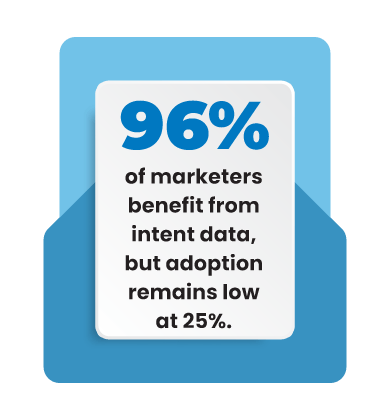
The strongest programs combine multiple signals to determine which accounts are most likely to convert. Here are the different types of signal-based GTM:
First-Party Engagement Signals
First-party signals come directly from interactions with your brand. Examples include pricing page visits, product page views, webinar attendance, content downloads, demo requests, and product usage activity. Because these signals originate from owned channels, they provide the clearest indication of buyer interest and should receive the highest prioritization.
Career and Leadership Signals
New executives evaluate vendors, introduce processes, and allocate fresh budgets. Key signals include executive hires, internal promotions, department leadership changes, founder transitions, and former customers joining target accounts. These events frequently trigger technology evaluations and purchasing decisions within the first few months.
Growth and Financial Signals
Business expansion usually increases technology needs. Funding rounds, mergers, acquisitions, earnings announcements, market expansion plans, and rapid hiring indicate strategic investment. Companies undergoing growth often require new tools, operational improvements, and scalable processes. These signals help identify organizations with both urgency and purchasing capacity.
Digital Intent Signals
Signals include competitor comparisons, category-related keyword searches, review site activity, social media engagement, industry content consumption, and discussions in professional communities. When multiple stakeholders from the same account exhibit similar behaviors, the likelihood of an active buying signals cycle increases significantly.
Competitive and Technographic Signals
Technology changes often signal evaluation activity. Examples include adopting new software, removing existing tools, integrating complementary platforms, negative reviews of competitors, or discussions about vendor dissatisfaction. These signals indicate potential replacement opportunities and allow teams to engage prospects while they are assessing alternatives.
4. Benefits of a Signal-Based GTM Strategy
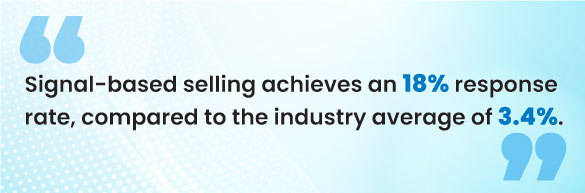
Signal-based selling helps sales teams identify and engage prospects based on real buying behaviors rather than assumptions. By leveraging signals such as website visits, job changes, funding announcements, hiring activity, intent data, and technology adoption, sales reps can focus their efforts on accounts that are most likely to convert. One of the biggest benefits is higher conversion rates. When sales teams reach out at the right time with relevant context, prospects are more likely to engage. Instead of sending generic messages, reps can tailor their outreach based on specific events or behaviors, making conversations more timely and meaningful.
Signal-based selling also improves sales efficiency. Rather than working through long, static lead lists, reps can prioritize accounts showing active buying intent. This allows them to spend more time on high-potential opportunities and less time chasing unqualified leads, resulting in greater productivity and stronger pipeline generation. Another key advantage is the ability to revive dormant opportunities. New signals, such as a funding round, leadership change, or expansion initiative, provide a natural reason to reconnect with previously inactive prospects and restart conversations.
In addition, signal-based selling enables teams to act quickly on high-intent opportunities. Real-time insights help sales representatives engage prospects when interest is at its peak, increasing the chances of securing meetings before competitors do. It also strengthens alignment across sales, marketing, and customer success teams. By working from the same behavioral data and intent signals, teams can coordinate outreach, improve lead handoffs, and create a more seamless buyer journey.
5. Building a Signal-Based GTM Framework
Effective signal-based GTM frameworks appear simple but rely on sophisticated systems behind the scenes. High-performing teams build continuous feedback loops that capture, analyze, and act on signals while constantly learning and improving outcomes.
Step 1: Define and Align Your ICP
A successful signal-based GTM strategy starts with a clearly defined Ideal Customer Profile (ICP). Analyze your highest-value customers to identify common firmographic and technographic traits, while also documenting characteristics of poor-fit accounts. Align sales, marketing, and customer success around this profile to ensure everyone targets the right opportunities and avoids wasting resources on accounts unlikely to convert or expand.
Step 2: Identify and Stack Meaningful Signals
Combine fit signals (industry, company size, technology stack), intent signals (topic research, competitor comparisons), and engagement signals (website visits, webinar attendance, content downloads) to create a complete account view. Signal stacking helps teams distinguish casual interest from genuine b2b buying signal readiness, enabling more accurate prioritization and smarter outreach.
Step 3: Score and Prioritize Accounts
Transform signals into actionable intelligence through a scoring framework. Assign different weights to activities based on their buying significance; for example, a pricing-page visit carries more value than a blog view. Create clear thresholds that categorize accounts as hot, warm, or cold. This helps sales teams focus on high-priority opportunities while marketing continues nurturing accounts that need more engagement.
Step 4: Build Context-Driven Playbooks
Signals become valuable only when they trigger consistent actions. Develop playbooks that specify how teams should respond to different combinations of signals. For instance, multiple stakeholders attending a webinar could trigger immediate sales outreach, while increased intent around a specific topic may launch personalized marketing campaigns. Context-rich playbooks ensure every signal leads to a coordinated and relevant customer experience.
Step 5: Automate Workflows and Actions
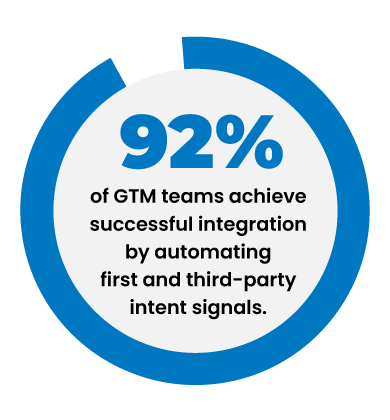
Use automation to route qualified accounts to the appropriate sales representatives, notify teams of important activity, enrich contact data and buying signal data, and trigger personalized campaigns. Automated workflows eliminate manual handoffs, reduce response times, and ensure prospects receive timely engagement while their interest and intent signals are still fresh.
Step 6: Measure, Learn, and Optimize
Track outcomes such as response rates, meetings booked, pipeline generated, deal velocity, and revenue influenced by specific signals. Analyze which signals and combinations consistently lead to wins, then refine scoring models, thresholds, and playbooks accordingly. Continuous optimization turns your GTM system into a learning engine that becomes more accurate and effective over time.
6. Common Challenges in Signal-Based GTM
Signal-based selling often fails not because of poor execution. Avoiding these common mistakes can significantly improve conversion rates, pipeline quality, and revenue outcomes.
Treating Signals as a Data Problem
Many teams invest heavily in intent and signal platforms but fail to build the workflows needed to act on them. Signals without clear ownership, routing, and execution processes become expensive notifications. Success depends on designing repeatable signal-to-action motions, not simply collecting more data.
Treating Every Signal Equally
Not all signals carry the same buying intent. A pricing page visit from an ideal customer account is far more valuable than a casual blog read from an unknown visitor. Without signal scoring and prioritization, sales teams become overwhelmed by low-value alerts and eventually ignore them altogether.
Relying on Signal Sources and Individual Activity
No intent provider offers complete accuracy or coverage. Teams that depend on a signal data source increase false positives. Likewise, triggering outreach based on one individual’s behavior instead of validating intent across multiple stakeholders and signal sources often results in mistimed engagement.
Delayed or Over-Automated Responses
Signals lose value quickly. Without defined service-level agreements (SLAs), delayed follow-up reduces conversion potential. At the same time, automating every response removes critical human judgment. High-value, high-intent signals deserve personalized outreach rather than generic sequences triggered solely by technology.
Measuring Activity Instead of Revenue Outcomes
Many organizations celebrate metrics such as signals detected, alerts generated, or emails sent. However, these activities reveal little about business impact. The real measures of success are signal-to-meeting conversion, pipeline contribution, win rates, and ROI by signal source. Closing the feedback loop enables continuous optimization.
7. Real-World Signal-Based GTM Examples
The following examples demonstrate how leading companies use signals to prioritize accounts, align teams, and accelerate revenue outcomes.
- PageUp connected intent data with buying group activity to identify accounts showing genuine momentum. Rather than relying on isolated leads, sales and marketing engaged multiple stakeholders across target accounts at the right time. The results included a 30% increase in account list size, 15 influenced opportunities, over 11% of annual pipeline generated, five six-figure deals closed within six months, and a 161% rise in SDR engagement.
- HubSpot built its GTM strategy around identifying and responding to customer intent through educational content. Blogs, webinars, free tools, and SEO attracted self-educating buyers actively seeking solutions. Clear calls-to-action converted engagement into pipeline opportunities. This intent-driven approach helped HubSpot surpass $100 million in ARR within six years and establish itself as a category leader in inbound marketing.
- Randstad shifted from lead-centric campaigns to dynamic account prioritization powered by intent insights, strengthening sales and marketing alignment at scale. Similarly, AVEVA used buying group intelligence to improve targeting across complex accounts, streamline workflows, and provide actionable insights to SDRs and marketers. Both examples demonstrate that combining intent data with operational discipline reduces wasted effort and improves enterprise GTM performance.
8. Key Metrics for Measuring Success
Measuring the effectiveness of your GTM strategy requires looking beyond vanity metrics to indicators that reflect efficiency, customer value, and sustainable growth. Acquisition metrics such as Customer Acquisition Cost (CAC), Cost Per Lead (CPL), sales cycle length, and conversion rates reveal how effectively marketing and sales investments generate revenue. Lower CAC and CPL, shorter sales cycles, and stronger lead-to-customer conversion rates indicate a well-optimized go-to-market strategy capable of turning demand into profitable growth.
Equally important are retention and customer value metrics. Customer Lifetime Value (CLTV) measures the total revenue generated throughout a customer relationship and should significantly exceed acquisition costs, with an LTV ratio of at least 3:1 considered healthy. Churn rate highlights how many customers leave over time, while retention rate reflects the ability to maintain long-term relationships and recurring revenue. Net Promoter Score (NPS) provides additional insight into customer satisfaction and advocacy, helping organizations understand whether they are creating experiences that inspire loyalty and referrals.
Finally, growth metrics demonstrate whether GTM efforts are translating into market success. Revenue growth rate reflects the company’s ability to expand consistently and sustain momentum, while market penetration rate measures how much of the target market has been captured and how much opportunity remains. Tracking these metrics together provides a balanced view of performance across the entire customer lifecycle. Rather than focusing on isolated activities, organizations should connect acquisition efficiency, customer outcomes, and business growth to evaluate the true impact of their GTM strategy and identify opportunities for continuous improvement.
9. Best Practices of Signal-Based GTM:
Signal-based GTM delivers results when organizations focus on operational discipline rather than simply collecting more data. The first best practice is to start small and prioritize quality over quantity. Instead of tracking dozens of triggers, begin with one or two high-impact signals, such as champion job changes, pricing page visits, or funding announcements. Proving the effectiveness of a focused use case helps teams refine workflows, build confidence, and scale strategically.
Second, orchestrate signals into actionable plays rather than treating them as isolated notifications. Signals become valuable only when paired with context, ownership, and predefined next steps. Enrich alerts with CRM history, account insights, buying group activity, and competitive intelligence so sellers understand not only what happened but also why it matters. Establish signal-to-action playbooks, routing rules, and response SLAs to ensure timely execution. Combining multiple signals, such as intent activity alongside executive hires or funding events, also improves accuracy and prioritization.
Maintain signal relevance through governance and continuous optimization. Build suppression rules to prevent signal fatigue and avoid overwhelming prospects with repetitive outreach from multiple teams. Introduce signal decay windows so outdated triggers expire before they lose relevance. Measure success using revenue-focused metrics such as signal-to-meeting conversion, pipeline influence, win rates, and signal source ROI rather than activity metrics alone. Regularly review which signals and combinations drive closed-won business and refine your scoring models accordingly.
Organizations that treat signal-based GTM as an evolving operating model, combining contextual intelligence, coordinated execution, and continuous learning, are best positioned to identify buying intent early, engage prospects effectively, and convert signals into predictable revenue growth.

10. The Future of Signal-Driven Revenue Growth
Signal-based GTM replaces static lead generation with real-time buyer intent data, enabling personalized engagement triggered by meaningful actions. Here is its future:
Unified Signal Layers Will Power Revenue Teams
Revenue teams will rely on unified signal layers that combine first-party product usage, CRM insights, third-party intent, website engagement, and customer interactions into a signal account view. This shared intelligence enables marketing, sales, and customer success to prioritize opportunities together and act with greater precision.
Agentic AI Will Turn Intent into Action
The next evolution of GTM isn’t just collecting signals. Agentic AI will translate buying intent into coordinated actions across channels. From personalized ads and dynamic content experiences to SDR outreach and nurture journeys, AI-powered workflows will ensure the right message reaches the right stakeholder at the right moment.
Depth of Signals Will Matter More Than Volume
A signal activity, such as downloading a whitepaper, rarely indicates purchase intent. High-performing teams will prioritize stacked signals: multiple stakeholders engaging with decision-stage content, increased product research, and third-party intent surges. These combined indicators create stronger buying narratives and drive timely human intervention.
Signals Will Fuel Expansion and Win-Back Growth
Existing customer signals, such as executive changes, funding announcements, declining product usage, or evolving business needs, can reveal expansion and win-back opportunities. Customer Success and account teams can proactively identify cross-sell, upsell, and re-engagement moments before competitors gain an advantage.
Every Signal Must Prove Revenue Impact
The future of revenue growth is not about collecting more data; it’s about operationalizing signals that drive measurable outcomes. Every signal should justify its existence through pipeline contribution and revenue impact. When integrated into end-to-end workflows and stacked strategically, signals become scalable growth programs that replace guesswork with precision.
Conclusion
Signal-based GTM represents a fundamental shift from volume-driven outreach to intent-driven engagement. In a world where buyers research independently and expect relevance, timing, and context to be the true competitive advantages. Organizations that can identify meaningful signals, align teams around shared intelligence, and translate insights into coordinated action will outperform those relying on static lists and outdated playbooks. The future belongs to revenue teams that prioritize precision over scale, combine AI with human judgment, and measure success through pipeline and revenue impact.