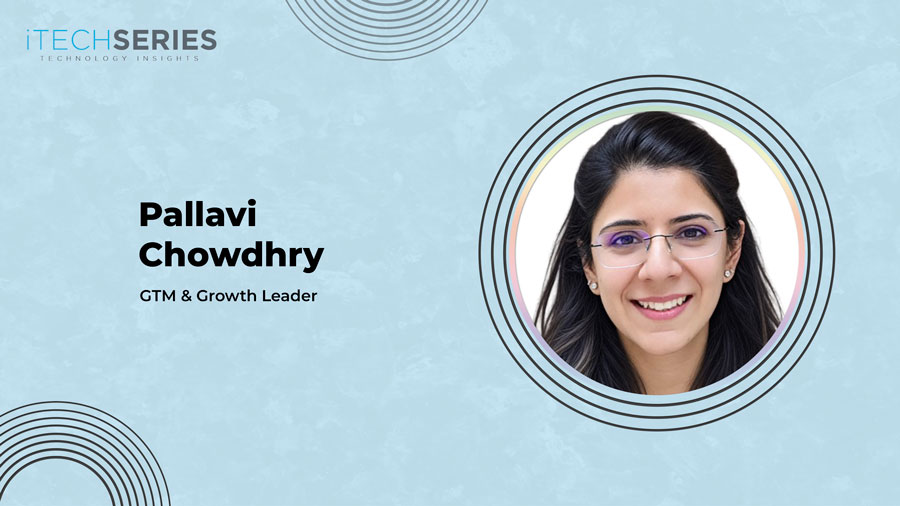
Sustainable growth in today’s evolving B2B landscape requires more than campaigns and performance metrics. It calls for connected systems that bring strategy, marketing intelligence, sales alignment, and measurement together. Pallavi Chowdhry, a senior marketing leader, shares her perspectives on redesigning growth engines, building scalable go-to-market (GTM) strategies, balancing short-term pipeline priorities with long-term demand creation, and harnessing AI to turn customer intelligence into meaningful business outcomes.
It’s great to have you on, Pallavi. Could you please tell us a bit about yourself and your journey as a marketer?
Thanks for having me. As an individual, I am a curious traveller, adventure seeker, and enthusiastic DIYer—IKEA included. IKEA has taught me a few things about leadership: read the instructions, keep the pieces together, and don’t panic when one screw is left over. At work, I bring that same curiosity to marketing. I enjoy connecting strategy, people, and practical execution to turn good ideas into growth.
I did not take a straight path into marketing. After an internship at PepsiCo, I had hoped to start my career in FMCG, but the 2009 recession led me to business analysis at Coforge. I then moved into consulting and presales, where I shaped proposals and responded to RFPs. It was
an unexpected but useful start. I learned how businesses make decisions before I began helping them decide why to buy. Over nearly two decades, I have worked across North America, Europe, and, in recent years, APAC. My experience spans start-ups, scale-ups navigating change, and larger enterprise organisations, across consulting, solution work, and B2C and B2B marketing.
Start-ups taught me to wear many hats, roll up my sleeves, and build from the ground up. Larger organisations taught me to navigate complexity, align stakeholders, and bring teams together around shared goals. Together, those experiences have given me a broad view of
how businesses work and what makes marketing effective. I believe growth rarely comes from more marketing activity alone. It takes clear priorities, close coordination, and a shared understanding of success. I enjoy bringing strategy, marketing, sales, and measurement together to build a strong pipeline, stay relevant to local markets, and improve commercial performance.
You describe yourself as someone who enjoys redesigning the systems that create growth. What does that mean to you in practice, and how has it shaped your marketing approach?
To me, redesigning the systems that create growth means paying attention to what happens between strategy and results: the messy middle. I think about it through three lenses: focus, orchestration and measurement.
Focus: Are we focused on the right markets and customers? Are reliable data, account intelligence, and customer insight guiding that focus? Do marketing and sales agree on which signals matter, and are we acting on them consistently?
Orchestration: How well does that focus carry through to execution in our campaigns and tactics? Are regional campaigns connected to the strategy? Are marketing and sales aligned on the outcomes, expectations, and follow-through? Is there a clear handoff and a shared understanding of what happens next? Does the MarTech stack support the journey from focus to action?
Measurement: Do we have the right measures of success at each stage of that journey? Do they reflect the sales cycle? Do teams share a view of progress, and is there a regular forum to look at what is working, what is not, and what to scale, optimise or stop? That is how I think about growth engines and redesigning growth systems: looking at whether focus, orchestration, and measurement are working together to move the business forward. Easier said than done. There are a lot of cogs to align before the wheel gets moving, and that is what makes the work interesting.
In an environment where marketing performance is under constant scrutiny, how should leaders balance short-term pipeline targets with long-term demand creation?
I would start by refusing to treat them as competing agendas; they are, in turn, complementary. Short-term pipeline matters: the business needs opportunities now, and marketing has to be accountable for how it contributes.
The balance comes from being explicit about the role of each investment. Some activities are designed to capture existing intent or progress named accounts. Other work builds understanding, preference, and trust before a buyer is ready to act. They need different time horizons and different measures, but they should connect through a shared view of the markets and customers we care about. Good performance management gives executives a credible view of near-term contribution while making the longer-term demand work visible, rather than forcing every activity into one short-term number.
What have you learned about building GTM strategies that can scale across regions without losing local relevance?
You need a common strategic spine, with room for local teams to make real choices. The spine might define the priority customer, the core value proposition, the outcomes we’re trying to achieve, and how we’ll measure progress. Local relevance comes from listening closely to the market and adapting the proof, channels, partners, and customer experience.
The mistake is assuming that consistency means using the same campaign everywhere. In APAC, markets can differ in how buyers evaluate a solution, which relationships carry weight, and what kind of engagement earns attention. The practical test is whether the regional strategy gives local teams enough clarity to move quickly and enough space to respond to what customers in their market actually need.
“I believe growth rarely comes from more marketing activity alone. It takes clear priorities, close coordination, and a shared understanding of success.”
How do you see AI reshaping the relationship between marketing intelligence, sales execution, and customer experience over the next few years?
AI will make the loop between insight and action much faster; it already is. Marketing has traditionally gathered signals, analysed them, and then tried to get the right context to sales or use it to improve an experience. AI can help teams find patterns across more information, prepare for customer interactions, tailor content, and make execution more responsive. But speed alone isn’t the advantage. The quality of the underlying customer understanding matters, as does whether teams know what to do with the insight. If the data is fragmented, a crucial data point is not in the system of record, or the handoff is unclear, AI may
simply help an organisation act faster on the wrong thing. So I see the opportunity as practical: use AI to support research, planning, execution, and analysis, while keeping people responsible for judgment, context, and customer trust. The most valuable use cases will connect better intelligence to more relevant experiences and more useful conversations with sales.
What are some common gaps between the customer intelligence organisations collect and the insights they actually use?
One gap is that information is spread across systems and teams, so no one has a useful view of the customer or account. Another is that organisations collect a lot of activity data but don’t connect it to a decision. A dashboard can show what happened without helping a leader decide where to invest, what to change, or which accounts need a different approach. Sometimes a signal is labelled as intent without enough context about what it means or how confident we should be in it.
What I have learned is that intelligence becomes useful when it is built on reliable signals, answers a specific business question, reaches the people who can act on it, and gives them enough context to make a sound decision.
What is one career lesson that fundamentally changed how you think about marketing leadership?
That leadership is less about being the person with all the answers or knowing everything, especially in the current landscape, and more about creating the conditions for good decisions, fostering an environment of learning, and having strong execution.
I have worked in very different environments: building a growth function, making performance data useful across a large regional organisation, and aligning teams around go-to-market priorities. In each case, progress depended on clarity: what mattered, who needed to be involved, what the next decision was, and how we would know whether it was working.
The job is to set direction and create an operating rhythm where people have enough context and autonomy to do their best work, while staying accountable for the commercial outcome. You don’t need to own every detail to take responsibility for the system.
About Pallavi Chowdhry
Pallavi is a marketing leader with extensive experience across consulting, analytics, digital marketing, and enterprise go-to-market strategy. Her expertise spans regional GTM strategy, full-funnel enterprise marketing, account-based marketing (ABM), AI go-to-market initiatives, customer intelligence, and pipeline growth. Having worked across startups, scale-ups, and global enterprises in APAC, North America, and Europe, Pallavi combines strategic thinking with operational execution to navigate complex business challenges and build scalable growth models.