
A strong B2B brand does more than create recognition. It shapes how buyers perceive value, evaluate options, and make decisions. As B2B buying journeys become more complex, companies need brand strategies that connect positioning, messaging, buyer needs, and business priorities. Building brand equity is no longer simply about awareness; it can influence trust, consideration, demand, pipeline, and long-term growth. In this article, we explore how modern B2B branding companies can develop a strategic brand foundation, understand their ideal customers and buying committees, strengthen positioning and messaging, connect brand with B2B demand generation, and measure its impact on meaningful business outcomes.
1. Brand strategy vs. brand identity vs. brand positioning
Brand strategy, brand identity, and B2B brand positioning are closely connected but serve different purposes. B2B brand strategies are the overarching plan that defines how a company builds, communicates, and grows its brand to achieve business goals. It connects audience needs, market opportunities, differentiation, messaging, and long-term growth.
Brand identity is how the company presents itself. It includes its name, logo, visual language, tone of voice, b2b brand messaging style, and other recognizable elements that shape how the brand appears across channels. B2B brand positioning defines where the brand stands in the market and how it is perceived relative to competitors. It clarifies the audience the company serves, the problem it solves, the value it provides, and why buyers should choose it.
Together, these elements create a cohesive brand: strategy provides direction, identity creates recognition, and positioning establishes relevance and differentiation.
2. Understanding Today’s B2B Buyer
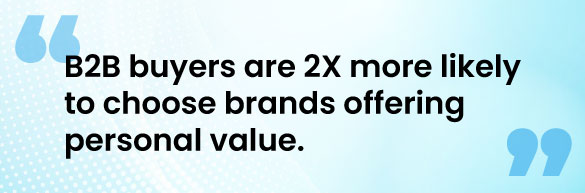
Today’s buyer is more informed, independent, and digitally driven than ever. Instead of relying on sales representatives for information, buyers conduct extensive research online, compare alternatives, evaluate peer opinions, and consume content before engaging with vendors. Their journeys are rarely linear and often involve multiple stakeholders with different priorities, from executives and finance teams to IT and end users.
Modern B2B buyers are also looking beyond products and features. They want solutions that address specific business challenges, demonstrate measurable value, integrate with existing systems, and provide a seamless experience. Trust, credibility, transparency, security, and long-term partnership increasingly influence purchasing decisions.
For B2B brands, this shift means visibility must begin well before a sales conversation. Buyers expect relevant, useful information across search, websites, social channels, communities, and other digital touchpoints. Content must answer questions, address stakeholder concerns, and support buyers throughout their independent research. A strong brand strategy therefore needs to meet buyers where they are, understand what influences their decisions, and build confidence long before they enter a formal sales conversation.
3. Defining Your ICP and Buying Committee in B2B
Successful B2B marketing starts with understanding who is most likely to buy, what drives their decisions, and who influences the purchase. Here are the steps to identify your ideal B2B buyers.
Ideal Customer Profile
An ideal customer profile (ICP) describes the type of organization that is the best fit for your solution. Key characteristics can include company size, industry, revenue, geography, technology stack, growth stage, and existing business challenges. A well-defined ICP helps teams prioritize high-value accounts instead of pursuing every possible prospect.
Buyer Personas
Within each target account, different stakeholders have different motivations. Buyer personas represent these individuals based on their roles, goals, challenges, responsibilities, and influence. For example, a CMO may prioritize revenue and brand impact, while a technology leader may focus on integration, security, and scalability.
Buying Committees
B2B purchases rarely involve one decision-maker. A buying committee may include executives, budget owners, technical evaluators, end users, procurement teams, and legal or security stakeholders. Mapping these roles helps marketers create relevant b2b brand messaging for each participant while maintaining a consistent value proposition.
Customer Pain Points
Understanding customer pain points is essential for connecting brand marketing solutions to real business needs. These may include inefficient processes, rising costs, fragmented data, security risks, poor customer experiences, or difficulties scaling operations.
Business Priorities and Buying Triggers
Buyers are more likely to engage when a solution supports an important business priority or responds to a specific trigger. Leadership changes, new regulations, technology investments, rapid growth, budget shifts, competitive pressure, or operational challenges can accelerate purchasing decisions.
Regional and Industry Differences
ICP characteristics and buying behavior can vary significantly across industries and regions. Regulatory requirements, market maturity, cultural preferences, budgets, and purchasing processes can influence how organizations evaluate solutions. Adapting messaging and engagement strategies to these differences enables more relevant and effective B2B brand campaigns.
 4. Building a Strong B2B Brand Positioning Framework
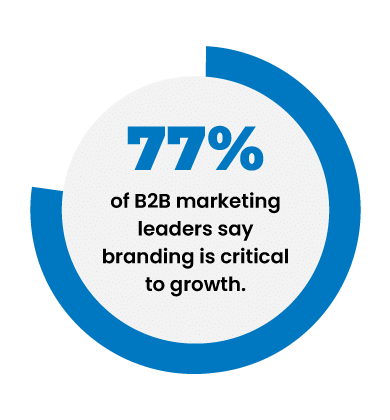
A strong brand positioning framework helps businesses clearly define their market space, differentiate from competitors, address customer needs, communicate unique value, and build a consistent, compelling brand identity.
Market/Category Positioning
Clearly define the market or category where your brand competes and the space you want to own in customers’ minds. Consider your target audience, market needs, category expectations, and emerging opportunities. A well-defined position makes it easier for prospects to understand what your brand offers and why it matters.
Competitor Analysis
Analyze competitors to understand how they position themselves, communicate their value, serve customers, and differentiate their offerings. Examine their strengths, weaknesses, b2b brand messaging, pricing, customer experience, and market reputation. This analysis can reveal positioning gaps and opportunities to create a stronger, more relevant position in the market.
Differentiation
Identify what makes your brand meaningfully different from competing alternatives. Differentiation may come from technology, expertise, innovation, customer experience, product capabilities, service quality, pricing, or a distinctive business model. Focus on differences that are valuable to customers, credible, and difficult for competitors to easily replicate.
Customer Problems
Effective positioning begins with understanding the problems your customers are trying to solve. Identify their biggest challenges, frustrations, risks, unmet needs, and operational barriers. Connecting your brand to these problems demonstrates customer understanding and helps position your solution as relevant, useful, and capable of delivering meaningful business outcomes.
Unique Value
Define the unique value your brand provides to customers and connect it directly to their priorities. Explain how your solution improves their situation through measurable benefits such as greater efficiency, reduced costs, improved security, stronger customer experiences, increased productivity, or faster B2B growth compared with available alternatives.
Positioning Statement
Turn your positioning strategy into a concise statement that communicates who you serve, what category you operate in, the value you provide, and why you are different. A clear positioning statement creates a foundation for consistent messaging across marketing b2b brand campaigns, sales conversations, content, websites, and customer communications.
5. Creating Clear and Consistent Brand Messaging
A strong B2B brand strategy depends on messaging that is clear, consistent, and relevant across every customer touchpoint. Consistent messaging builds familiarity, strengthens credibility, and makes it easier for buyers to understand why your brand is worth considering.
Define the Core Brand Message
Start with a clear core brand message that captures who you serve, what you offer, the problem you solve, and the value you deliver. Keep it simple enough for teams across marketing, sales, and customer success to understand and use consistently. This message should serve as the foundation for all other brand communications.
Build Messaging Pillars
Develop a small set of messaging pillars that support your core positioning. These pillars can focus on key customer challenges, differentiators, outcomes, or areas of expertise. They give content and campaigns a consistent narrative while allowing teams to adapt the message for different audiences and use cases.
Adapt Messaging to Different Audiences
B2B buying groups rarely have identical priorities. A CIO may care about business impact and risk, while a technical leader may focus on integration, scalability, and performance. Create audience-specific messaging that addresses these priorities without changing the underlying brand promise.
Connect Product Messaging to Customer Value
Product and solution messaging should go beyond features. Explain how your offering solves specific problems and delivers measurable outcomes. Support these claims with relevant proof points, such as customer success stories, data, testimonials, industry recognition, or performance results.
Differentiate Through Competitive Messaging
Your messaging should also make clear why buyers should choose your brand over alternatives. Identify meaningful points of differentiation rather than relying on generic claims such as “innovative” or “best-in-class.” Focus on the capabilities, expertise, experiences, or outcomes that competitors cannot easily replicate.
Maintain Consistency Across Channels
Finally, apply your messaging framework across your website, social media, email campaigns, sales conversations, events, and content. The tone and format can change by channel, but the core story should remain recognizable. Regularly review messaging across teams and touchpoints to identify inconsistencies and keep the brand aligned as the business evolves.

6. Connecting Brand Building With B2B Demand Generation
B2B growth becomes more sustainable when brand building and demand generation work together. Brand creates awareness, recognition, trust, and preference, while demand generation marketing turns that attention into engagement, pipeline, and revenue. Instead of treating them as separate activities, businesses should connect both through a unified strategy.
Brand building establishes the foundation for future demand. Consistent messaging, thought leadership, valuable content, customer stories, and strong market visibility help prospects recognize and trust a company before they are ready to buy. This is particularly important in B2B, where purchasing decisions often involve multiple stakeholders and longer sales cycles. Demand generation marketing focuses on capturing and converting existing interest. B2B brand campaigns across search, social media, email, events, content, webinars, and account-based marketing can move prospects from awareness to consideration and eventually toward purchase. However, these activities become more effective when prospects already understand and trust the brand.
The connection between the two begins with shared audiences and messaging. Marketing teams should understand which accounts and personas they want to reach and develop consistent messaging across both brand and demand campaigns. Brand content can create awareness around customer problems, while demand-focused content can provide deeper information that helps prospects evaluate brand marketing solutions. Businesses should also connect brand and demand through the customer journey. A prospect may first encounter a brand through a thought-leadership article or social post, later engage with a webinar, download a guide, visit the website, and eventually request a sales conversation. Each interaction should reinforce the same positioning while providing increasingly relevant information.
Measurement should extend beyond immediate lead generation. Brand metrics such as awareness, reach, engagement, branded search, and share of voice can be evaluated alongside demand metrics such as qualified leads, pipeline, conversion rates, and revenue. Looking at both sets of metrics provides a more complete picture of marketing performance. A B2B brand creates the conditions for demand, while demand converts market interest into business outcomes. Connecting both enables B2B organizations to build long-term preference while generating measurable pipeline and revenue in the short term.
7. B2B Branding Strategy Examples and Success Stories
Successful B2B brands show that a strong brand strategy goes beyond logos and visual identity. The most effective brands create distinctive positioning, communicate clear value, and build emotional connections with their audiences. Here are some B2B success stories that demonstrate effective brand marketing strategy:
HubSpot:
HubSpot built its brand by championing inbound marketing and educating businesses about a new approach to customer acquisition. Through blogs, guides, free tools, and educational resources, it consistently connected the brand with accessible marketing expertise. This content-led strategy helped HubSpot establish strong category recognition. Key lesson: Raising awareness of audiences can strengthen positioning and establish category leadership.
Microsoft
Microsoft’s Story Labs platform highlights employees across the organization, from researchers and developers to designers and creators. Instead of focusing only on products and corporate achievements, Microsoft showcases the people behind its technology. This human-centered storytelling makes a global enterprise feel more personal and authentic. Key lesson: Real people and experiences can make B2B brands more relatable.
Salesforce
Salesforce uses customer success stories to demonstrate how businesses solve challenges and achieve measurable outcomes with its platform. By allowing customers to share their experiences, Salesforce builds credibility while helping prospects understand real-world applications. These stories provide powerful social proof without relying solely on promotional messaging. Key lesson: Customer-led storytelling can make B2B brand claims more credible and persuasive.
Gainsight
Gainsight helped establish Customer Success as a distinct business function and technology category. Through research, thought leadership, education, and community building, the company consistently promoted the importance of customer retention, expansion, and long-term value. This helped position Gainsight as an authority in the space. Key lesson: Defining and consistently owning a meaningful category can create strong B2B brand differentiation.
8. Common Mistakes and Brand Marketing Solutions: B2B Brand Strategy
A successful B2B branding strategy requires more than strong messaging and creative campaigns. Brands must overcome challenges around attribution, alignment, data, personalization, and changing buyer expectations. Identifying these common mistakes early can help marketing teams build stronger strategies, improve performance, and create more meaningful connections with B2B audiences.
Poor Marketing Attribution
Challenge: Relying only on last-touch attribution can overlook the influence of content, events, social media, and other early-stage interactions.
Solution: Combine quantitative analytics with self-reported attribution, first-party data, and qualitative insights. Align Marketing, Sales, RevOps, and Finance on shared definitions for measuring pipeline and revenue contribution.
Sales and Marketing Misalignment
Challenge: Separate goals, account lists, and customer insights can create disconnected B2B brand campaigns and missed opportunities.
Solution: Establish shared ICPs, target accounts, KPIs, and pipeline goals. Use a common CRM or ABM platform as the source of truth, while encouraging regular collaboration, joint account planning, and cross-functional discussions.
 Poor Data Quality
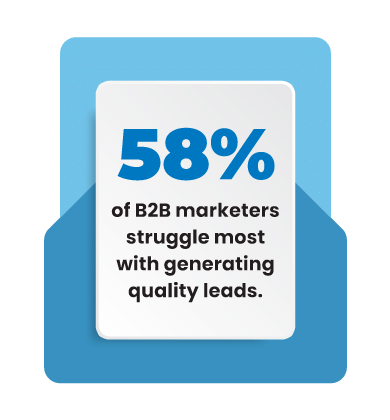
Challenge: Incomplete, outdated, or inaccurate customer data can lead to weak targeting, ineffective personalization, and wasted marketing spend.
Solution: Regularly clean and enrich CRM records with reliable firmographic, technographic, and intent data. For new markets or verticals, validate demand signals and develop audience insights before launching targeted campaigns.
Personalization Without Trust
Challenge: Overly aggressive personalization can feel intrusive, particularly as buyers become more conscious of how their data is collected and used.
Solution: Build personalization around first-party data, relevant behavioral signals, and transparent consent practices. Segment audiences thoughtfully and provide genuinely useful experiences instead of relying on excessive personal details or automated messaging.
Failing to Adapt to Buyer Behavior
Challenge: Treating buyers as dependent on traditional sales funnels can leave brands disconnected from increasingly digital, self-directed purchasing journeys.
Solution: Create accessible, value-driven content across the channels buyers use to research brand marketing solutions. Provide educational resources, customer reviews, pricing information, demos, and relevant insights that build trust before a sales conversation begins.
9. Future of B2B Branding Strategy
B2B branding is evolving beyond traditional positioning and corporate messaging. As technology, buyer expectations, and digital experiences change, brands must find new ways to stay relevant, build trust, and create meaningful connections. The future of B2B brand strategies will be shaped by five major shifts.
Hyper-personalization powered by AI will move B2B branding from broad segmentation toward increasingly precise experiences. AI and advanced analytics can help brands understand individual buyer behaviors, preferences, and intent, enabling more relevant content, recommendations, and interactions. As personalization becomes the norm, generic messaging will struggle to capture attention. Brands will need real-time customer insights and journey data to create experiences that feel relevant at every stage.
Purpose-driven branding will also become increasingly important. B2B buyers are paying greater attention to company values, social impact, and authenticity. Brands that clearly connect their business purpose with meaningful action can strengthen trust and differentiate themselves in competitive markets. However, purpose must be demonstrated through genuine practices rather than simply communicated through campaigns. Immersive digital experiences will further reshape B2B engagement. Virtual showrooms, interactive demonstrations, digital events, and augmented reality can make complex products easier to understand while creating richer brand experiences. As digital interactions become central to the B2B buying journey, consistency and quality across every touchpoint will become critical.
The future of B2B branding will belong to organizations that combine technology with human understanding. Brands that personalize intelligently, demonstrate purpose, create engaging experiences, protect customer data, and communicate authentically will be better positioned to build lasting brand equity and loyalty.
Conclusion
A successful B2B branding strategy is no longer built around visibility alone. It requires a clear understanding of buyers, differentiated positioning, consistent messaging, and meaningful connections between brand building and demand generation marketing. As buying journeys become more digital and complex, brands must create experiences that build trust before prospects engage with sales. At the same time, AI, personalization, immersive experiences, data ethics, and evolving buyer expectations are reshaping how B2B brands compete. Organizations that combine strategic clarity with customer insight, authentic storytelling, and measurable business outcomes can strengthen brand equity while driving sustainable growth.