
Over the past two years, the B2B go-to-market strategy has undergone a fundamental shift. What once drove campaigns and activity metrics now defines systems, alignment, and measurable revenue impact. Marketing is a core driver of pipeline, growth, and customer value.
Through interviews with global marketing leaders, in-depth podcast conversations, and practitioner-led contributions, the GTM Library has captured this transformation as it unfolds. Across regions, industries, and roles, a clear pattern emerges: success depends on how effectively organizations connect B2B marketing strategy, execution, and customer insight.
This article presents a curated collection of key trends, challenges, and innovations shaping modern GTM, helping businesses refine execution, improve efficiency, and stay competitive.
2. The Architect’s Vision: How Leaders Are Redesigning GTM Systems
Across conversations with global marketing leaders, a clear shift is underway. From pipeline ownership to cross-functional alignment and global execution, today’s leaders are redesigning GTM to operate as a connected, revenue-driving engine.
2.1 Marketing as a Revenue Growth Engine
The most consistent theme across interviews is the evolution of marketing from a lead generation function to a core driver of revenue. In our featured interviews, Katie Marcham (ThoughtSpot), Greg Acquavella (Commvault), and Jonathan Levanon (Sapiens) emphasize that success is defined by measurable contributions to pipeline and business growth.
As a result of this shift, marketing teams are taking responsibility beyond top-of-funnel activities and aligning closely with revenue outcomes. Rather than optimizing for volume, organizations are focusing on building predictable, scalable growth systems that connect marketing efforts directly to pipeline generation and conversion. Marketing is increasingly accountable for driving efficiency, quality, and consistency across the funnel.
A key enabler of this transition is the integration of data and AI into decision-making. Leaders highlight the importance of using data as a strategic foundation for forecasting, planning, and optimization. By leveraging insights effectively, marketing teams can move from reactive execution to proactive growth orchestration. At the same time, there is a growing emphasis on balancing brand and demand. Rather than treating them as separate priorities, modern GTM leaders view brand as a long-term driver of pipeline and trust, working alongside performance marketing to deliver sustained growth. This integrated approach allows organizations to build both immediate impact and long-term market positioning.
2.2 Alignment as Infrastructure, Not Initiative
Another defining characteristic of modern GTM is the shift from siloed functions to deeply aligned, cross-functional systems. In our exclusive interviews, Julie Liu (AvePoint), Stefanie Rice (OpenText), and Elizabeth Shen (Kaspersky) demonstrate that alignment is an ongoing operational requirement. Breaking down silos between marketing, sales, and revenue operations is critical to achieving consistent and scalable outcomes. This means moving beyond surface-level collaboration to establishing shared goals, unified metrics, and integrated workflows. When teams operate with a common understanding of success, it becomes easier to coordinate efforts, reduce friction, and accelerate pipeline movement.
In practice, this alignment transforms GTM into a connected revenue system. Marketing no longer simply hands off leads. Instead, teams work together across the entire customer lifecycle, from awareness to conversion and beyond. This requires clear communication, mutual accountability, and a shared commitment to revenue growth outcomes. Leaders also emphasize the role of disciplined operating models in enabling alignment. Structured processes, regular planning cycles, and data-driven decision frameworks ensure that all teams are working toward the same goals. By embedding alignment into how organizations operate, companies can build more resilient and efficient GTM systems.
2.3 Scaling Globally, Executing Locally
As organizations expand across regions and markets, the challenge of balancing global consistency with local relevance becomes increasingly complex. In our GTM interview series, B2B marketing leaders Alexandra Williams (Precisely) and Mariette Snyman (IFS) showcase that successful global GTM strategies require more than standardization. They require adaptability.
Maintaining a consistent brand and strategic direction is essential for building recognition and trust at scale. However, using a uniform approach across diverse markets often limits performance. Instead, leading organizations are adopting models that combine a centralized B2B marketing strategy with localized execution. Localization is emerging as a key performance lever. Whether it involves adapting messaging, campaigns, or channels, tailoring GTM efforts to regional nuances can significantly improve engagement and conversion. This requires a deep understanding of local customer behavior, market dynamics, and cultural context.
Operating across complex enterprise markets also demands flexibility in execution. Leaders highlight the importance of empowering regional teams while maintaining alignment with global objectives. This balance allows organizations to respond quickly to market changes without losing strategic coherence. At the same time, data and technology play a critical role in enabling global scale. Unified systems and shared insights help organizations maintain visibility across regions, ensuring that learnings can be applied consistently while still allowing for local variation.

3. Decoding Today’s Buyer: The Rise of the Non-Linear Buyer Journey
Insights from our GTM podcast conversations reveal a fundamental change in how B2B buyers discover, evaluate, and purchase solutions. This shift requires organizations to rethink how they engage, influence, and build trust across the entire customer lifecycle.
3.1 Funnels No Longer Define the Buyer Journey
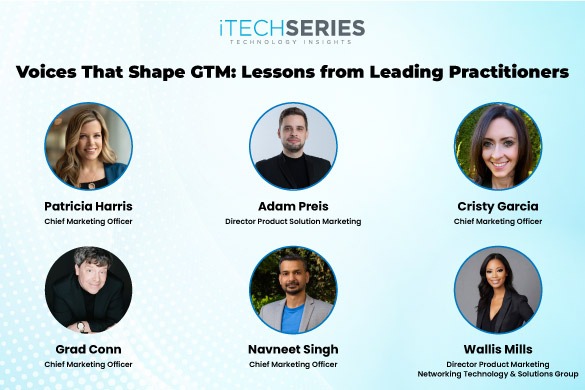
The traditional funnel model is becoming less relevant in today’s B2B marketing landscape. In our fireside conversation, Patricia Harris (Blue Yonder) and Adam Preis (Ping Identity) show that buyers now follow self-directed paths shaped by independent research, digital content, and peer validation. Long before engaging with sales teams, buyers explore solutions, compare vendors, and build strong opinions based on available information. Decision-making has also become more complex. Multiple stakeholders are involved, each evaluating solutions through their lens. This creates a nonlinear process where buyers revisit stages, reassess priorities, and move unpredictably across the digital customer journey mapping. The idea of a fixed progression no longer reflects reality.
At the same time, expectations around engagement have shifted. Buyers expect consistent and relevant interactions across all touchpoints. This has led to the rise of always-on engagement models where brands maintain a continuous presence rather than relying on isolated campaigns. Success now depends on staying visible, useful, and aligned with buyer needs at every stage.
3.2 The Day Zero Advantage: Winning Before the Funnel
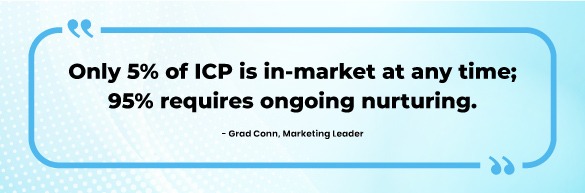
A key takeaway from our GTM conversations with Cristy Garcia (impact.com) and Grad Conn (Pendo) is that influence begins well before any formal buying process. Buyers often form perceptions, preferences, and shortlists before they actively start evaluating solutions. This early phase can be described as day zero, where awareness and trust determine future consideration.
Brand plays a critical role at this stage. It is not limited to visibility but acts as the foundation for credibility and familiarity. When a need arises, buyers naturally gravitate toward brands they already recognize and trust. This makes brand-building strategies a direct contributor to the pipeline rather than a separate objective. Being present early in the customer journey creates a significant advantage. As buyers conduct independent research, they are more likely to engage with companies that have established relevance and authority. Trust becomes the key factor influencing decisions. Organizations that invest in consistent messaging, valuable content, and authentic engagement are better positioned to convert interest into opportunity.
3.3 Storytelling, Simplicity, and Category Creation
In a crowded and complex market, clarity has become a competitive advantage. During our exclusive discussion with Navneet Singh (Eightfold AI) and Wallis Mills (AMD), they highlighted that buyers respond to simple and compelling narratives rather than detailed technical explanations. Clear storytelling helps translate complex offerings into meaningful value that resonates with different stakeholders.
Effective narratives focus on outcomes rather than features. They connect solutions to real business challenges and demonstrate impact in a way that is easy to understand. This approach reduces friction in decision-making and makes it easier for buyers to evaluate options.
Another important trend is the shift toward category creation. Instead of competing within existing definitions, leading organizations are shaping new categories that reflect emerging needs. This allows them to influence how buyers perceive problems and solutions. By defining the narrative, they position themselves as leaders rather than participants. Strong storytelling and category creation work together to build differentiation and drive preference.
3.4 AI and Human Trust: The New Buyer Dynamic
As mentioned during our podcast with Grad Conn (Pendo) and Patricia Harris (Blue Yonder), AI shows how it supports personalization, improves targeting, and enhances overall efficiency. It allows marketers to deliver relevant experiences across multiple channels with greater consistency. However, the growing use of AI also introduces new challenges. Buyers expect transparency and authenticity in every interaction. Over-reliance on automation can create experiences that feel impersonal or disconnected. Maintaining trust requires a careful balance between technology and human input.
Human insight remains essential in understanding context, emotion, and nuance. As emphasized by Wallis Mills (AMD), empathy and judgment cannot be replaced by automation. The most effective strategies combine data-driven execution with human-centered communication. Organizations that strike this balance are better equipped to build trust, strengthen relationships, and create meaningful engagement that drives long-term growth.
4. Guest Contributions: Practitioner Perspectives from the Field
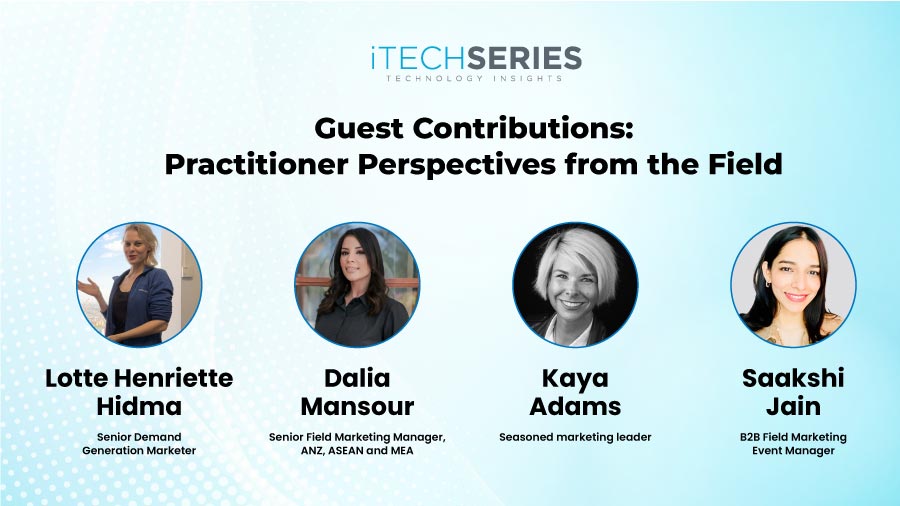
Our guest articles bring fresh perspectives from global B2B marketing experts, offering practical lessons on B2B marketing strategy, inclusivity, and field execution. These contributions capture how thought leaders are navigating complexity, driving impact, and shaping the future of GTM.
4.1 Language as a Performance Lever: Lotte Henriëtte Hidma, Omnissa
In global B2B marketing, companies often choose English as the default for efficiency and scale. Lotte Henriëtte Hidma disputes this notion, demonstrating that language selections directly influence trust, understanding, and conversion. Her campaigns across EMEA demonstrated that locally tailored content delivers measurable performance gains; for instance, German-language ads outperformed English equivalents by 40% ROI. The insight is clear: English-only marketing may simplify operations, but it imposes hidden constraints on engagement and revenue. By prioritizing localization where it matters, organizations can connect more authentically with diverse audiences, improve campaign effectiveness, and unlock untapped growth in multilingual regions.
4.2 Driving Gender Equity Through Marketing: Dalia Mansour, Sprinklr
Dalia Mansour emphasizes that marketing platforms can be a force for social impact, particularly in advancing gender equity. Her article underscores that inclusion is a shared responsibility and that meaningful initiatives, like the Him for Her program, amplify collective action to break barriers and create opportunities for women. Beyond personal advocacy, she highlights that embedding equity into organizational culture fosters innovation, engagement, and long-term talent retention. The key lesson is that marketing leaders can combine business objectives with social responsibility, using storytelling, campaigns, and thought leadership to champion inclusion while strengthening brand reputation and inspiring meaningful industry-wide change.
4.3 Brand Awareness as Strategic Advantage: Kaya Adams
Kaya Adams reframes brand awareness as more than a top-of-funnel tactic; it is a competitive advantage in today’s complex B2B buying landscape. With longer decision journeys and larger buying committees, being part of the customer’s “Day Zero List” is crucial for consideration. Brands that fail to establish early mindshare risk being excluded before the formal evaluation begins. Adams stresses that marketers must invest in building consistent visibility, authority, and relevance to influence buyers from the earliest stages. By positioning the brand strategically in the dark funnel, organizations increase their chances of making shortlists, shaping perceptions, and driving pipeline outcomes even before buyers engage directly with sales teams.
4.4 The Evolution of Field and Event Marketing: Kayla Drake & Saakshi Jain
Both Kayla Drake and Saakshi Jain explore how field and event marketing have transformed in response to economic shifts, digital adoption, and changing buyer expectations. Drake highlights the post-pandemic recalibration and the need for adaptable, experience-led strategies, while Saakshi Jain emphasizes a three-phased approach: integrating creativity as a catalyst, marketing as a bridge, and events as platforms for engagement. Together, they illustrate that success now requires blending digital and physical touchpoints, delivering localized experiences, and aligning events with broader revenue growth objectives. The key takeaway is that field marketing must evolve from transactional activities into strategic, measurable initiatives that connect audiences, strengthen brands, and drive pipeline growth.
5. Core Convergences in Modern GTM Leadership
After two years of conversations across interviews, podcasts, and practitioner contributions, a set of clear convergences has emerged. These are not isolated trends but structural shifts that define how modern GTM operates.
5.1 From Leads to Revenue Growth Accountability
Marketing is no longer measured by lead volume but by its direct contribution to revenue. Organizations are shifting toward full-funnel accountability, where marketing owns pipeline quality, conversion, and impact. This requires tighter integration with sales and shared KPIs tied to business outcomes. The focus has moved from generating activity to driving measurable growth, ensuring marketing efforts translate into predictable and scalable revenue performance.
5.2 From Campaigns to Systems Thinking
GTM execution is evolving from isolated campaigns to interconnected systems. Rather than launching one-off initiatives, organizations are building repeatable frameworks that continuously generate and nurture demand. Data, automation, and structured processes power these systems, enabling consistency and scalability. Campaigns still exist, but they operate within a larger architecture designed to deliver sustained impact, operational efficiency, and long-term growth.
5.3 From Silos to Revenue Growth Alignment
Siloed functions are being replaced by unified revenue teams. Marketing, sales, and customer success are aligning around shared goals, metrics, and workflows to improve coordination and reduce friction. This shift goes beyond collaboration, embedding alignment into operating models and decision-making processes. When teams function as a single system, organizations can accelerate pipeline movement, improve customer experience, and drive more consistent revenue outcomes.
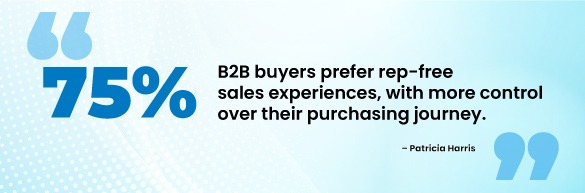
In a non-linear buying environment, trust has become a critical growth driver. Buyers engage with brands long before formal sales interactions, making credibility and consistency essential. Organizations are shifting from short-term transactions to long-term relationship building through brand, thought leadership, and meaningful engagement. Trust compounds over time, increasing conversion rates, strengthening retention, and creating sustainable competitive advantage.
5.5 From Intuition to Intelligence-Led Decisions
Decision-making in GTM is increasingly driven by data and AI. Leaders are using insights to guide strategy, optimize execution, and improve forecasting accuracy. This shift enables faster, more precise decisions while reducing reliance on assumptions. However, human judgment remains essential. The most effective organizations combine data-driven intelligence with experience and context to create balanced, informed, and adaptable GTM strategies.
6. Turning Strategy into Pipeline: The GTM Execution
B2B Insights from interviews, podcasts, and guest articles show how organizations apply alignment, data, brand, and AI to drive scalable revenue.
6.1 Build a Unified Revenue Engine
Insights from interviews consistently emphasize the need to connect marketing, sales, and customer success into a single revenue engine. Applying this means aligning teams around shared pipeline goals, unified KPIs, and coordinated workflows. Instead of isolated handoffs, organizations should create continuous collaboration across the funnel. Podcast discussions reinforce that this alignment improves conversion and accountability. When teams operate as one system, insights flow freely, execution becomes consistent, and pipeline generation becomes more predictable and scalable.
6.2 Activate Data into Actionable Signals
Across interviews and podcasts, leaders emphasize using data not just for reporting but for decision-making. To apply this approach, organizations must translate raw data into actionable signals that guide targeting, messaging, and timing. Guest contributors also highlight the importance of contextual insights, such as regional behavior or language preferences. By combining behavioral data with market understanding, teams can prioritize high-intent opportunities, optimize campaigns in real time, and improve efficiency across the pipeline.
6.3 Integrate Brand and Demand Across the Customer Journey
Podcast conversations and guest articles make it clear that brand and demand must work together. Execution requires building consistent messaging that supports both awareness and conversion. Insights around “Day Zero” and trust-building show that buyers engage long before formal evaluation. Applying this means investing in thought leadership, storytelling, and always-on engagement while connecting these efforts to demand generation. When brand and demand align, organizations create stronger recall, better engagement, and a higher-quality pipeline.
6.4 Scale with AI While Maintaining Human Relevance
Leaders across interviews and podcasts highlight AI as a key enabler of scale, from personalization to optimization. However, they also stress the importance of human judgment in maintaining authenticity and trust. Applying this insight means using AI to enhance efficiency while ensuring messaging remains relevant and empathetic. Guest perspectives on localization and experience further reinforce the need for human context. The most effective GTM execution balances automation with human insight to deliver meaningful, high-impact engagement.
Conclusion:
Two years of the GTM Library highlight a defining shift in B2B go-to-market strategy: success is no longer driven by isolated campaigns but by connected, intelligence-led systems. Across interviews, podcasts, and guest contributions, a consistent message emerges: alignment, data, brand, and trust are the foundations of sustainable growth. Organizations that combine these elements into a single execution model are better able to handle complexity, connect with modern buyers, and achieve measurable revenue impact. As GTM continues to change, the ability to turn insight into action will set leaders apart from followers and shape the next generation of scalable, resilient revenue engines.