
Storytelling in marketing transforms the way brands connect with their audiences by shifting the focus from products to people. In B2B marketing, authentic narratives highlight company values and demonstrate how real customers overcome challenges through meaningful solutions. Rather than emphasizing technical features, storytelling showcases the human impact behind business decisions and the measurable results achieved. By placing customers at the center of the narrative, brand storytelling builds emotional connections, strengthens trust, and enhances engagement across marketing channels. As competition intensifies, mastering storytelling becomes essential for creating memorable brand experiences, differentiating your business, and building long-term, value-driven relationships with clients.
1. What Is B2B Brand Storytelling?
B2B brand storytelling strategy is the strategic use of authentic narratives to build meaningful, value-driven connections between businesses and their audiences. Instead of focusing solely on product features or technical specifications, it highlights real challenges, human experiences, and measurable outcomes that matter to decision-makers. At its core, a B2B narrative communicates a company’s mission, vision, and values through stories that show how customers succeed because of its solutions.
Effective B2B storytelling humanizes complex products and services by placing clients, employees, or partners at the center of the narrative. It shares real-life obstacles, pivotal moments, and transformative results, helping prospects see themselves in similar scenarios. By weaving these stories consistently across websites, campaigns, social media, and sales conversations, brands create trust and credibility. Overall, B2B brand storytelling strengthens relationships, differentiates a company in competitive markets, and turns business interactions into lasting partnerships.
2. Why Is Storytelling Critical for Building Trust in B2B?
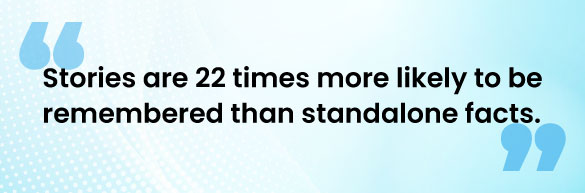
Trust is the foundation of every successful B2B relationship. Unlike impulse-driven consumer purchases, B2B decisions involve high stakes, long sales cycles, and multiple stakeholders. Storytelling helps bridge the gap between logic and emotion by presenting real experiences, authentic challenges, and meaningful outcomes that decision-makers can relate to. Rather than pushing product features, effective framing highlights how businesses solve problems, support growth, and deliver measurable results. When prospects see companies like their own overcoming similar obstacles, uncertainty decreases, and confidence grows. Stories humanize complex services, making brands feel approachable, transparent, and credible.
In a marketplace saturated with promotional messages, narratives cut through the noise by creating memorable, emotional connections. Research from organizations such as Edelman consistently shows that trust strongly influences purchasing decisions. Stories foster that trust by demonstrating expertise through lived experience instead of bold claims. By understanding customer pain points and weaving them into compelling narratives across marketing and sales channels, B2B brands build authenticity and long-term loyalty. Brand marketing transforms transactions into partnerships grounded in credibility and shared success.
3. The Core Elements of Effective B2B Brand Storytelling
Creating powerful B2B brand stories requires strategic clarity, emotional intelligence, and consistent messaging. Below are five essential elements, each critical to building narratives that resonate with decision-makers.
Start with Authentic Purpose
Effective B2B storytelling begins with a clear connection to your brand’s mission and values. Your narrative should reflect why your company exists beyond profit. For example, Microsoft reshaped its messaging to emphasize digital transformation and empowerment rather than just software features. When your purpose is authentic and consistently communicated, audiences perceive credibility.
Make Your Customers the Heroes
Compelling B2B stories position customers—not the brand—as the central characters. Highlight their challenges, decisions, and ultimate success. Instead of presenting technical specifications, focus on transformation and measurable progress. When prospects see organizations like their own navigating obstacles and achieving results, they envision similar success, building trust and relatability.
Weave Data into the Narrative
B2B buyers rely on narratives, and those must balance emotion with evidence. Integrate statistics, performance metrics, and measurable outcomes naturally within the narrative. Data storytelling validates the story’s credibility while reinforcing ROI. The key is blending human insight with quantifiable achievements to appeal to both analytical and strategic stakeholders.
Maintain Consistency Across Channels
Whether through video, blogs, case studies, or social media, your core message should remain unified. Adapt tone and format to suit each platform, but ensure every story reinforces your overarching brand narrative and values.
Focus on Transformation, Not Promotion
Great B2B storytelling emphasizes how a situation improved because of your solution. Show the before-and-after journey. Transformation-driven narratives create emotional impact, making your brand memorable and positioning it as a trusted long-term partner, which is crucial because it helps B2B decision-makers relate to the challenges faced by others and see the potential benefits of your solution

4. How Storytelling Influences B2B Decision-Makers
While B2B purchasing is often characterized as a cold, analytical process driven by spreadsheets and return on investment, the reality is that decision-makers are fundamentally human. Brand narrative serves as a powerful bridge between raw data storytelling and emotional conviction, transforming abstract features into relatable solutions. When a brand shares a narrative about a specific company overcoming a systemic hurdle, it shifts the focus from “what the product does” to “what the customer becomes.” This brand storytelling framework helps branding and narration visualize their own future success, making the perceived risk of a new partnership feel manageable and the potential rewards tangible.
Furthermore, visual storytelling builds essential psychological safety. In high-stakes corporate environments, the fear of making a wrong choice often outweighs the desire for innovation. A well-crafted story featuring a protagonist who faced similar pressures and emerged victorious provides social proof that logic alone cannot convey. It establishes the vendor not just as a tool provider but as a reliable protagonist in the client’s journey. By weaving technical specifications into a narrative arc, complete with a challenge, a turning point, and a resolution, brands can bypass the skepticism of the rational mind and resonate with the subconscious drivers of trust and loyalty. Ultimately, facts provide the evidence, but stories provide the meaning, ensuring that a brand remains memorable long after the pitch deck is closed.
5. A Proven Framework for B2B Brand Storytelling
Crafting a compelling B2B brand story requires strategy, clarity, and consistency. This framework guides you from defining your narrative to sharing impactful stories that engage, inspire, and drive results.
Define your narrative arc
Share your origin to convey authenticity and connect emotionally. Clearly articulate your value proposition, highlighting how your solutions solve real business problems. Conclude with a vision for the future that positions your brand as an industry catalyst. A strong narrative arc ensures every piece of content reinforces your mission, builds trust, and helps potential clients visualize the transformation your brand enables.
Identify and understand your audience
Analyze demographics, professional roles, geographic locations, and business challenges. Go deeper into psychographics, motivations, and pain points to craft stories that resonate. Understand how your audience consumes content, from reports to videos. Tailor the tone, examples, and insights to their perspective. When your narrative aligns with the audience’s needs and experiences, your messages gain credibility and inspire engagement across all channels.
Integrate storytelling across channels
Use case studies to showcase real-world results and client transformation. Write blogs to share expertise and thought leadership in accessible, narrative-driven formats. Employ video to humanize your brand with authentic customer stories. On social media, distill key narratives into concise, engaging posts that encourage deeper exploration. Each channel should reinforce the core message while adapting to the audience’s expectations and consumption habits.
Balance emotion with data
Start by highlighting human impact, showing how your solutions affect real people. Back this up with data, metrics, or measurable outcomes to prove effectiveness. For example, illustrate efficiency gains or cost savings achieved through your solution. Always include clear next steps, guiding the audience toward action. A balance of empathy and proof positions your brand as both relatable and trustworthy in a B2B context.
Build a storytelling framework
Create adaptable story templates that simplify content creation while allowing customization. Define tone and voice guidelines to ensure uniformity across marketing, sales, and customer communications. Use a content calendar to schedule stories strategically, maintaining a steady narrative flow that reinforces your core message. This systematic approach allows your team to consistently produce high-quality narration that supports brand objectives and business growth.
Share, measure, and refine
Choose channels strategically and tailor content to each platform while maintaining consistency. Track engagement, conversions, and feedback to assess impact. Analyze which stories resonate and why, then refine your approach for continuous improvement. Encourage customer participation through testimonials, reviews, or case studies. Iterating based on results ensures your storytelling remains relevant and effective and is a reliable driver of awareness, credibility, and revenue growth.

6. Where to Tell Your Story: Multi-Channel Distribution
B2B storytelling thrives when distributed across the right mix of channels, each chosen for its ability to engage the audience effectively. Case studies remain a cornerstone for demonstrating real-world impact, allowing brands to present detailed narratives that highlight transformation and success while building credibility with potential clients. Blogs provide a versatile platform to explore complex topics, share insights, and establish thought leadership, enabling readers to connect with the brand through informative and relatable stories.
Video content offers a highly engaging medium that brings stories to life visually and emotionally, whether through customer testimonials, product demonstrations, or behind-the-scenes perspectives that make the brand more human and relatable. Social media extends the reach of these narratives, breaking stories into concise, shareable moments that spark curiosity and encourage interaction while driving audiences toward deeper engagement. Email marketing delivers targeted, personalized content directly to decision-makers, enabling brands to nurture relationships with tailored stories that resonate with specific needs or challenges. Webinars, virtual events, and live sessions provide immersive opportunities for storytelling, creating interactive experiences where audiences can see the brand’s expertise, values, and solutions in action.
Choosing the best channels depends on the audience’s consumption habits, industry norms, and content format, ensuring that each story is delivered where it will have the greatest impact. When channels are selected strategically, and stories are adapted to their strengths, B2B brands can amplify engagement, reinforce credibility, and accelerate the connection between narrative and business growth, making storytelling a central driver of influence and reach.
7. Common Mistakes in B2B Brand Storytelling
In competitive B2B markets, a compelling brand story builds trust, differentiation, and long-term relationships. Here are five common mistakes businesses make in B2B brand storytelling.
Treating the Brand Story as a Sales Pitch
One of the most common mistakes in B2B brand storytelling is turning the narrative into a direct sales pitch. Instead of focusing on the customer’s challenges and journey, many brands highlight product features and promotional messaging. This approach fails to create an emotional connection or credibility. A strong brand story should communicate purpose, value, and impact. By focusing on how the brand solves real problems, businesses can create narratives that resonate with audiences.
Lack of a Clear and Authentic Narrative
Many organizations struggle to define a clear narrative that represents their mission, vision, and purpose. When the story is vague, overly complex, or inconsistent with company values, it becomes difficult for audiences to connect with the brand. Authenticity is critical in B2B storytelling. Companies must ensure their story reflects genuine experiences, customer outcomes, and real business impact rather than exaggerated claims or marketing buzzwords.
Failing to Differentiate from Competitors
In crowded B2B markets, many brand stories sound identical. Companies often rely on generic claims such as “industry-leading solutions” or “customer-centric approach,” which do little to distinguish them from competitors. Without a clear value proposition, the story loses impact. Effective storytelling should highlight unique capabilities, culture, expertise, or customer success stories that demonstrate why the brand stands apart and delivers distinct value in the market.
Inconsistent Messaging Across Channels
Another major mistake is failing to maintain consistency in brand storytelling across marketing channels. When messaging differs across websites, social media, campaigns, and sales communications, it can confuse customers and weaken brand credibility. A strong B2B brand story should remain consistent while adapting to different formats and audiences. Clear messaging guidelines and alignment across marketing, sales, and communications teams ensure the story remains coherent and impactful.
Ignoring the Need to Evolve the Story
Many organizations treat their brand story as a static narrative rather than an evolving one. As markets change, products evolve, and customer expectations shift, the brand story must adapt accordingly. Failing to revisit and refine the narrative can make the brand appear outdated or disconnected from current realities. Regularly reviewing messaging, incorporating customer insights, and aligning with evolving business strategy keeps the story relevant and compelling.

8. The Future of B2B Brand Storytelling
The future of B2B brand storytelling is shifting from product-centric messaging to narratives that focus on human impact, trust, and real business outcomes. Buyers are no longer convinced by technical jargon or feature-heavy pitches alone in an increasingly crowded and AI-driven marketplace. They want stories that help them visualize success, understand the value of a solution, and feel confident that a brand truly understands their challenges. Storytelling is becoming a strategic tool that gives context to data storytelling, transforming complex information into meaningful insights that decision-makers can easily grasp. Rather than leading with specifications and technical details, successful B2B marketers will begin by identifying the problems their audience is trying to solve and the opportunities they want to unlock.
The B2B buyer will increasingly be positioned as the hero of the narrative, overcoming obstacles such as inefficiency, market pressure, or operational risk with the help of the brand’s solution. In this model, the product is not the story itself but the enabler of the customer’s success. Emotional connection will also play a larger role in B2B storytelling. While business decisions rely on logic and data, they are ultimately made by people who seek confidence, reliability, and reassurance. Stories that reflect the real pressures and priorities of customers build empathy and credibility in ways that raw data cannot. At the same time, technology will enhance storytelling rather than replace it. AI will enable deeper personalization, allowing brands to tailor narratives for specific industries, roles, and stages of the buying journey.
Storytelling will also expand into richer formats such as video series, podcasts, interactive content, and customer-led narratives that create more immersive experiences. Over long and complex sales cycles, consistent storytelling will help maintain alignment and reinforce trust at every stage. Ultimately, in the future of B2B marketing, the brands that win will not simply present better products. They will tell clearer, more authentic stories that inspire confidence, simplify complexity, and demonstrate real impact.
9. Case Studies: Storytelling in B2B
B2B brands use storytelling to simplify complex solutions, highlight customer success, and create emotional connections, proving that compelling narratives can drive trust, engagement, and business growth.
- Cisco’s “Never Better” campaign transforms complex networking technology into human stories of real impact. Through interactive digital storytelling, videos, and visuals, Cisco highlights how its solutions help organizations solve meaningful problems such as improving safety, enabling smart cities, and expanding access to essential services. Instead of technical explanations, the campaign focuses on customer success and real-world transformation.
- Salesforce uses customer success stories to bring its brand narrative to life. Instead of focusing on product features, the company highlights how businesses use its platform to grow, innovate, and strengthen customer relationships. By positioning the customer as the hero and Salesforce as the guide, these stories demonstrate real transformation and build credibility through authentic, experience-driven testimonials.
- Asana’s storytelling centers on a problem most modern workplaces face: the chaos of email-driven collaboration. Through its website and content, Asana illustrates how teams waste time managing endless messages instead of doing meaningful work. By clearly showing the problem and positioning its platform as the solution, the brand creates a relatable narrative about productivity and teamwork.
- IBM has long used storytelling to humanize complex technology and highlight real-world challenges. In one notable campaign, the company focused on problems within the education system and demonstrated how its technology and initiatives could help improve learning environments. By connecting technology with social impact and everyday challenges, IBM’s storytelling makes its innovation more relatable and meaningful.
Conclusion
B2B brand storytelling transforms marketing from product promotion into a meaningful connection. By combining authentic narratives with real customer outcomes, brands can humanize complex solutions and build credibility with decision-makers. Effective storytelling places the customer at the center, balances emotion with data, and maintains consistent messaging across channels. When done well, it strengthens trust, simplifies complex ideas, and differentiates brands in competitive markets. As B2B buyers increasingly seek transparency and proven value, storytelling becomes a strategic tool for influencing decisions and building long-term relationships.