
B2B marketing is entering a new era of precision, agility, and meaningful connection. The breakthroughs of 2025 have reshaped how businesses build trust, influence buying committees, and convert intent into revenue. As we move into 2026, the brands that win will be those that combine data intelligence, sales and marketing alignment, creative storytelling, and buyer-centric experiences. This article distills the most powerful lessons from 2025: what worked, what failed, and what transformed the way industrial and tech-focused B2B companies engage their markets. If you want to supercharge your future B2B strategies, sharpen your competitive edge, and create marketing that drives real business impact, these insights will guide your next big leap.
1. How has the B2B Marketing Landscape Evolved?
B2B marketing has undergone a dramatic transformation over the past decade, shifting from traditional, sales-driven outreach to a dynamic, digital-first, buyer-centric ecosystem. What once relied heavily on trade shows, cold calls, and one-size-fits-all messaging has now evolved into a complex landscape shaped by data intelligence, automation, and human-centric engagement. Buyers today are more informed, digitally empowered, and selective; they expect brands to deliver value long before a sales conversation ever begins.
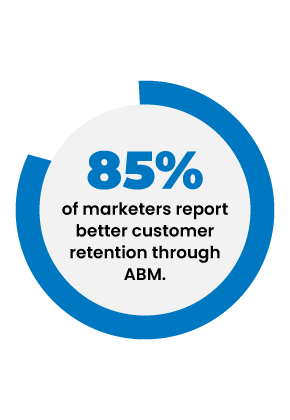
Real-time access to buyer insights has changed how marketers understand intent, personalize experiences, and influence decision-making. With buying committees expanding and research journeys now largely anonymous, marketers must create content marketing ecosystems, not campaigns, and deliver relevance across every touchpoint. Technology has accelerated this shift: AI, CRM platforms, automation tools, ABM, and predictive analytics have streamlined everything from targeting to lead nurturing. At the same time, consumer behavior has been pushed by digital marketing interactions, virtual engagement, and self-guided research.
But alongside digital innovation comes a renewed emphasis on authenticity and human connection. Storytelling, employee advocacy, social communities, and value-led growth now play a significant role in driving trust and long-term partnerships. B2B brands are no longer just selling solutions; they are shaping experiences, building credibility, and delivering tailored outcomes that match the evolving expectations of the modern buyer. In short, B2B marketing is no longer about selling harder; it’s about understanding better, personalizing deeper, and connecting smarter.
 2. Trends That Redefined the B2B Landscape in 2025
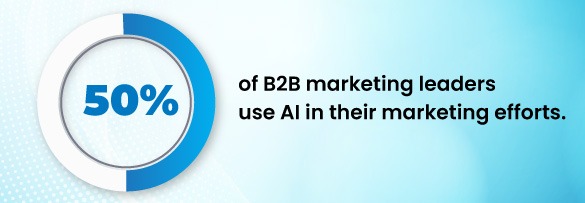
The B2B marketing landscape in 2025 was reshaped by rapid automation adoption, major shifts in channel performance, and evolving buyer expectations. While AI dominated industry conversations, most marketing teams remained in the early stages of implementation, using tools like ChatGPT primarily for content creation, ideation, and increased output. Leaders emphasized that AI’s real value lies in eliminating the blank-page problem, improving speed, and enabling teams to focus on strategy rather than production. Smaller companies relied on digital intelligence to stretch limited resources, mid-sized teams balanced content marketing strategy and workflow automation, and large enterprises prioritized compliance-focused integrations.
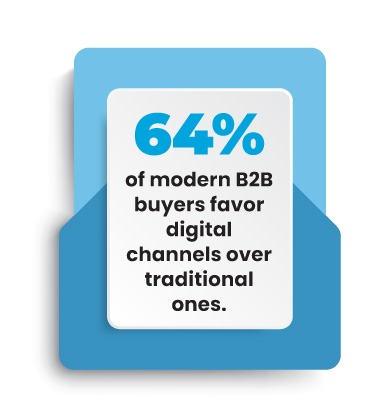
Channel performance also shifted significantly. LinkedIn remained the undisputed B2B powerhouse, driving both organic thought leadership strategy and highly targeted paid campaigns. Meanwhile, search strategy evolved as LLM-driven discovery began influencing how buyers find vendors, prompting marketers to optimize content for authoritative, conversational answers rather than traditional keywords. At the same time, rising digital fatigue sparked a resurgence in in-person events, which became essential for accelerating deal cycles and building trust.
Several channels declined as teams cut underperforming tactics: paid social outside LinkedIn, generic digital advertising, content syndication, and cold calling. Marketing leaders instead doubled down on precision targeting, higher-quality content, and tailored campaigns aligned with real buyer behavior.
Finally, buying journeys grew longer and more complex. Larger buying committees, deeper research, and heightened budget scrutiny required marketers to deliver value-driven content, build trust earlier, and personalize messaging for multiple stakeholders. 2025 marked a year when speed, expertise, and strategic focus became the new marketing advantage.
3. Challenges Marketers Faced in 2025
As maxketers navigated an unpredictable 2025, several recurring challenges reshaped strategy, execution, and customer engagement. These hurdles revealed critical gaps, offering important lessons to carry forward into 2026.
The Data-Insights Gap
Despite having access to more data than ever, many B2B marketers in 2025 struggled to convert raw information into strategic decisions. Teams gathered customer behavior, intent signals, CRM insights, and campaign metrics to interpret them. This created superficial reporting, misaligned targeting, and inefficient spending. The challenge wasn’t data shortages; it was the inability to derive clarity from complexity. As a result, marketers often relied on assumptions rather than insight-driven actions, weakening personalization and slowing the impact on revenue.
Over-Reliance on AI Without Human Judgment
Artificial intelligence became deeply embedded in content marketing strategy, campaign optimization, and buyer predictions in 2025. But many marketers relied on AI tools without proper oversight, leading to generic outputs, biased recommendations, and inaccurate interpretations of customer intent. Automated suggestions sometimes overshadowed strategic thinking, diminishing creativity and contextual understanding. While smart technologies accelerated execution, they also created dependency, reducing differentiation among brands. Marketers who failed to blend automation with critical human judgment often ended up with inconsistent messaging, misleading insights, and campaigns disconnected from real buyer needs.
Acquisition Obsession Over Customer Lifetime
Companies spent aggressively on new customer acquisition but underinvested in nurturing, engagement, and retention. As budgets shifted, many teams prioritized top-of-funnel leads while neglecting long-term customer experience. This led to rising churn, lower renewal rates, and weakened loyalty. Existing customers expected consistent value, proactive communication, and personalized service—yet many brands treated them as afterthoughts. The challenge wasn’t generating demand; it was sustaining relationships. Businesses that ignored retention lost recurring revenue and market trust, despite strong acquisition pipelines.
The SEO Decline Caused by Short-Term Thinking
Many marketers in 2025 underestimated the continued power of SEO, prioritizing paid campaigns and AI-generated content over sustained organic visibility. Search algorithms evolved, rewarding depth, expertise, and authoritative content, yet outdated SEO tactics persisted. As competitors doubled down on thought leadership and domain authority, those who neglected SEO saw declining rankings and reduced pipeline quality. The biggest challenge wasn’t algorithm changes; it was inconsistency. Brands treated SEO as a project, not a system, limiting long-term traffic growth and weakening their digital marketing presence.
Treating Social Media as a Posting Platform
While B2B audiences became more active on LinkedIn, YouTube, and niche communities in 2025, many marketers still treated social media as a broadcast tool. They posted content but didn’t engage, converse, or build emotional affinity. As buying committees grew larger and more anonymous, social touchpoints became crucial for trust-building, yet brands failed to leverage them. The real challenge was mindset, as marketers underestimated how much buyers rely on social signals when forming vendor perceptions. This disengagement costs opportunities for influence, advocacy, and early-stage brand preference.

4. Breakthrough Lessons From 2025 for B2B Marketers
B2B marketing strategies in 2025 delivered powerful lessons on focus, clarity, and customer-centric growth. As markets shift heading into 2026, these insights help marketers stay resilient, strategic, and future-ready:
Balance Confidence and Realism
Economic expectations for 2025–2026 call for steady but slower growth, making balanced messaging essential. Marketers should communicate optimism around sectors driving digital transformation, sustainability initiatives, and supply chain modernization while showing awareness of near-term challenges. Customers respond to brands that demonstrate both clarity and honesty about market conditions. Position your organization as future-ready, resilient, and grounded in real data. This balanced tone builds trust and helps buyers feel confident in long-term partnerships despite short-term uncertainty.
Build Messaging Around Real Customer Behavior
2025 confirmed that generic messaging no longer resonates. Marketers must understand customers beyond firmographics and focus on behaviors, motivations, and problems. Approaches like ideal customer archaeology reveal what truly drives decisions. Use problem-centered storytelling that reflects what keeps buyers up at night and how your solution creates meaningful change. Keep messaging specific, consistent, and backed by evidence across websites, trade shows, and sales conversations. Precision in customer understanding is now the foundation of differentiation.
Prioritize the Customers Who Drive Revenue
The 80-20 principle remains a powerful guide for marketers. Most revenue comes from a small group of high-value customers, making strategic focus essential. Identify your best customers using data, understand the factors behind their loyalty, and adapt marketing strategies to deepen relationships. Align sales and marketing on profitability, retention, and expansion. Small adjustments in product information, lead times, or segmentation can create scalable results. Concentrated effort delivers far more impact than broad, unfocused campaigns.
Connect AI to Real Business Outcomes
Marketing automation adoption surged in 2025, but many projects failed because they lacked measurable objectives. Decision intelligence provides a framework that links digital technology tools to clear business outcomes such as conversions and lead quality. Tools like causal decision diagrams help teams see how decisions affect multiple departments and future results. Avoid chasing quick ROI metrics and instead define success before selecting tactics. When AI is grounded in strategy, it strengthens accuracy, speed, and decision-making across marketing.
 Align Marketing With Growing Market Sectors
Industries such as tech, marketing, infrastructure, and data centers grew rapidly in 2025, creating strong opportunities for B2B marketers. Effective campaigns highlight how your offerings support innovation in these expanding industries. Understanding changes in trade, tax, and regulation helps teams anticipate buyer concerns and craft a relevant content marketing strategy. Marketers who position their companies as informed partners rather than vendors gain deeper trust. Market-aware messaging guides buyers through complexity and signals long-term strategic value.
Lead With Agility and Customer-Centric Growth
2025 reinforced the importance of agility, authenticity, and strong customer relationships. Marketers must adapt quickly, communicate transparently, and balance AI tools with real human connections. Trust takes time to build and is easily lost, so consistent value and clear communication are essential. Internal culture also shapes external perception, making employee experience a core part of brand strength. As 2026 approaches, growth will favor marketers who remain flexible, relationship-focused, and committed to continuous improvement.
5. Strategic Priorities for 2026 in B2B Marketing:
B2B marketing strategies are evolving rapidly, driven by smarter tools and faster execution. To stay competitive, marketers must adopt strategies aligned with current trends and buyer behavior. These steps break down the essential steps needed to build high-performing B2B strategies that attract, engage, and convert the right customers.
Step 1: Understand Shifting Buyer Journeys
B2B marketing in 2026 requires a complete understanding of how modern buyers research and evaluate solutions. Decision cycles are longer and involve more stakeholders, making journey mapping essential. Study behavior across websites, communities, social platforms, webinars, and sales interactions to identify the moments where buyers seek clarity or reassurance. Use this information to refine messaging and content pathways. When teams understand each step of the buyer journey, they guide prospects more confidently and remove friction that slows conversion.
Step 2: Use Data and Intent Signals to Personalize Outreach
Personalization is a core requirement for performance in 2026. Buyers expect communication that reflects their industry, stage, and level of urgency. Use intent data, website behavior, enriched profiles, and engagement insights to craft tailored customer experiences that match real interests. Precise personalization increases trust and improves qualification. Equip sales and marketing with shared data so both teams act on the same signals. When the entire funnel responds to verified intent, outreach becomes more accurate, relevant, and efficient.
Step 3: Build Authority and Thought Leadership Strategy
Prospects rely on credible brands that help them learn before they buy. Data and information have become the most effective form of early engagement. Publish content that answers complex questions, simplifies industry trends, and provides practical solutions. Use blogs, guides, videos, research summaries, and interviews to position your brand as a trusted resource. Strengthen authority by sharing consistent insights on LinkedIn, industry forums, and partner channels. When buyers view your brand building as a reliable teacher, they convert more confidently.
Step 4: Create Integrated Campaigns Across Digital and Event Channels
Integrated campaigns produce stronger outcomes than isolated tactics. In 2026, digital marketing channels, field events, and hybrid experiences work best when aligned under a single strategic theme. Use paid media, search, email, webinars, and virtual or in-person events to reinforce the same narrative. Events create high-intent conversations, while digital assets maintain momentum. This structure improves reach, strengthens message recall, and accelerates pipeline generation. The most impactful B2B campaigns use every touchpoint to tell one cohesive story.
Step 5: Use AI to Improve Productivity and Decision Making
AI is a core driver of marketing performance in 2026. Use smart marketing tools to accelerate research, refine audience insights, and generate actionable data insights that inform strategy. Automate repetitive tasks so teams can invest more time in strategic creativity and customer engagement. AI also improves forecasting by analyzing patterns across sales data, market trends, and campaign performance. When marketers pair automation with human judgment, they produce higher-quality output in less time and make more confident decisions across the entire funnel.
6. What to Keep Doing: Best Practices to Carry Forward
B2B marketing continues to evolve, but several core practices remain essential for sustained growth. Here are the best practices B2B marketers can take forward to 2026:
Clear Positioning and Ideal Customer Profile Alignment
Clear positioning and a well-defined ideal customer profile remain the foundation of every successful strategy. Buyers in 2026 encounter many similar products, so clarity in messaging is critical. When positioning is precise and aligned with the ideal customer profile, both marketing and sales communicate consistently and build trust through relevance. Continued refinement of the ideal customer profile helps identify decision-makers, their challenges, and signals that indicate intent to buy. This clarity accelerates engagement, improves lead quality, and strengthens long-term customer relationships.
Building a Scalable Content Marketing Strategy
Every piece of content should move the buyer toward understanding how the solution solves a problem or meets a goal. The focus should remain on audience needs and intent rather than higher publishing frequency. Blending formats such as articles, videos, case studies, guides, and webinars creates a comprehensive journey that educates and influences. Incorporating community contributions and user insights increases authenticity. AI tools will support research and repurposing, but human judgment must guide strategy to maintain originality and a consistent brand voice.
Strengthening Community-Led Growth
Buyers rely more on peer recommendations than on direct selling, making active participation in existing communities essential. Providing insights, answering questions, and sharing expertise builds trust and recognition. Creating a dedicated community can deepen engagement and help surface success stories, discussions, and user feedback. Encouraging advocates to participate strengthens loyalty, while AI can assist in identifying engagement patterns. When integrated with marketing, community interactions contribute to content creation, wider reach, and steady lead generation.
Expanding Data-Driven Personalization
Data-driven personalization will remain critical for meaningful engagement. Leveraging data insights from audience behavior, preferences, and stages in the buyer lifecycle ensures relevant communication. Unified marketing and sales data enables consistent follow-up and a smoother buyer experience. Personalization must address real challenges and goals rather than rely on surface-level details. AI supports this at scale by creating tailored experiences that strengthen customer satisfaction and boost conversions.
Strategic Use of Automation
Automation will continue to improve efficiency and effectiveness in line with the latest digital marketing trends. It streamlines workflows, repurposes content, scores leads, and sequences communication. AI enhances content creation and supports consistent brand alignment. With human strategy guiding all decisions, these tools enable teams to focus on high-impact initiatives that drive measurable growth.
Conclusion
B2B marketing in 2026 demands clarity, precision, and a deeper commitment to understanding buyers. The lessons from 2025 show that growth comes from balancing data intelligence with human judgment, building authentic relationships, and focusing on the customers who matter most. As buyer journeys expand and technology accelerates, the most successful brands will be those that align strategy with real behavior, deliver consistent value, and adopt AI as a tool for smarter decisions rather than shortcuts. By staying agile, strengthening trust, and investing in long-term impact, B2B marketers can enter 2026 ready to drive meaningful and measurable business growth.